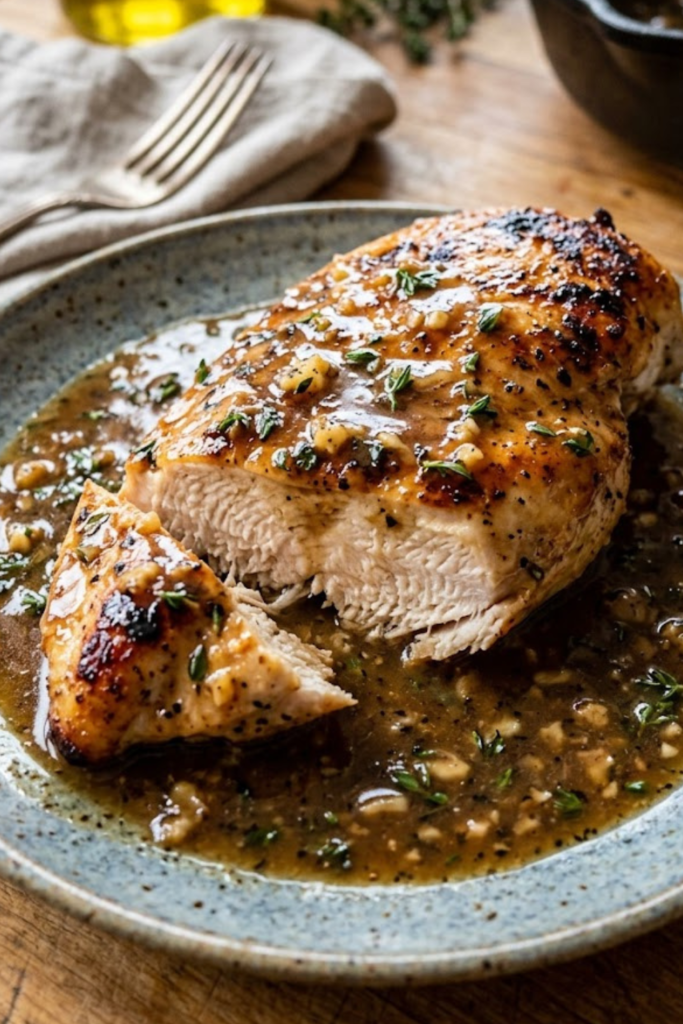
I used to think chicken breast was the cardboard of the meat world. Honestly! It is so easy to turn a good piece of meat into a dry coaster that even my dog would think twice about. Did you know that over 60% of home cooks struggle with dry poultry? It’s a real tragedy in the kitchen! But look, I finally cracked the code to making chicken breast with mild pan gravy that actually melts in your mouth. Whether you are a busy parent or just someone who wants a hug in a bowl, this recipe is your new best friend. We’re going to talk about searing, deglazing, and why your pan’s “brown bits” are actually liquid gold.
Picking the Best Meat for a Juicy Result
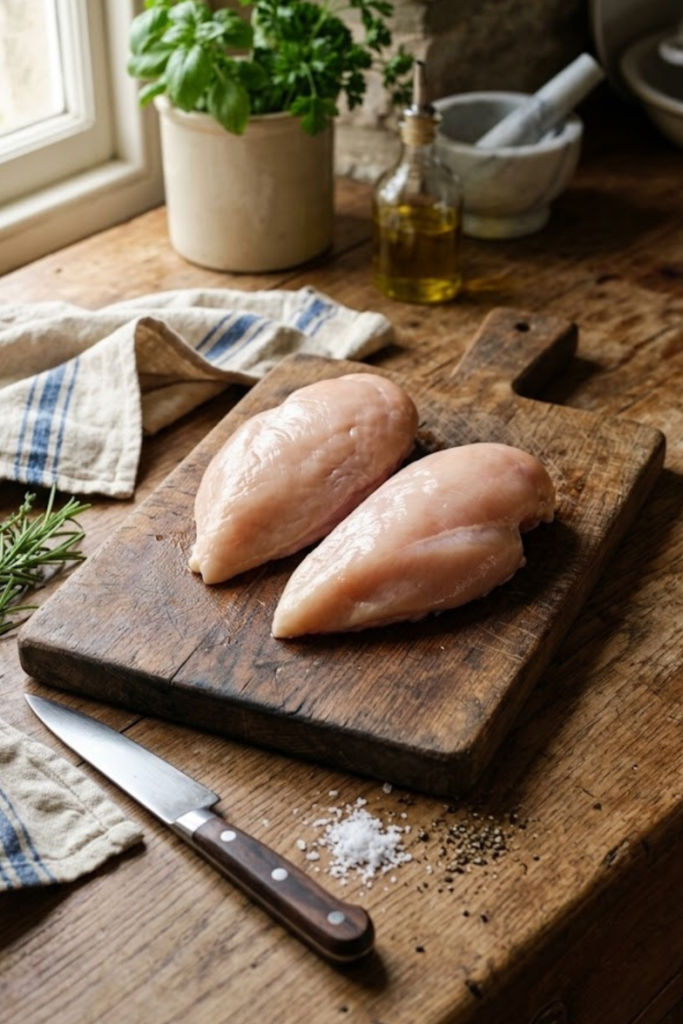
Look, I’ve spent over twenty years in a classroom, and if there is one thing I’ve learned, it is that you can’t get a good grade if you don’t do the homework. Cooking is the same way! If you want a chicken breast with mild pan gravy that actually tastes good, you have to start with the right bird. I used to just grab whatever was on sale, but then I’d wonder why my dinner tasted like a wet sponge or a piece of wood. It was frustrating!
Size and Shape Matter
Have you ever noticed how a chicken breast is usually thick on one end and skinny on the other? If you just throw that in the pan, the skinny part turns into a hockey puck before the thick part is even safe to eat. I started using a meat mallet (or a heavy rolling pin) to whack the chicken until it’s the same thickness all over. My kids think it’s hilarious when I’m in the kitchen “beating up the food,” but it really makes a difference. When the meat is even, it cooks even. Simple math, right?
The Tempering Trick
Here is a big mistake I see all the time. People take the chicken straight out of the cold fridge and drop it into a hot pan. Don’t do that! The outside gets shocked and tough while the inside stays raw. I like to let my meat sit on the counter for about 15 or 20 minutes before I start. It “takes the chill off.” This helps the chicken breast with mild pan gravy stay tender because the muscle fibers don’t seize up the moment they hit the heat.
Air-Chilled vs. Water-Chilled
Next time you are at the grocery store, look at the label. Most cheap chicken is “water-chilled,” which means they soak it in cold water to cool it down. That meat absorbs the water like a towel. When you cook it, all that water leaks out into your pan, and instead of a nice sear, you end up boiling your chicken. It’s gross. I always try to find “air-chilled” chicken. It might cost a buck or two more, but it tastes like actual chicken and not just flavorless moisture. Plus, it helps your mild pan gravy stay rich instead of getting watered down. Trust me on this one, it’s worth the extra change.
The Secret to That Perfect Golden Pan Sear
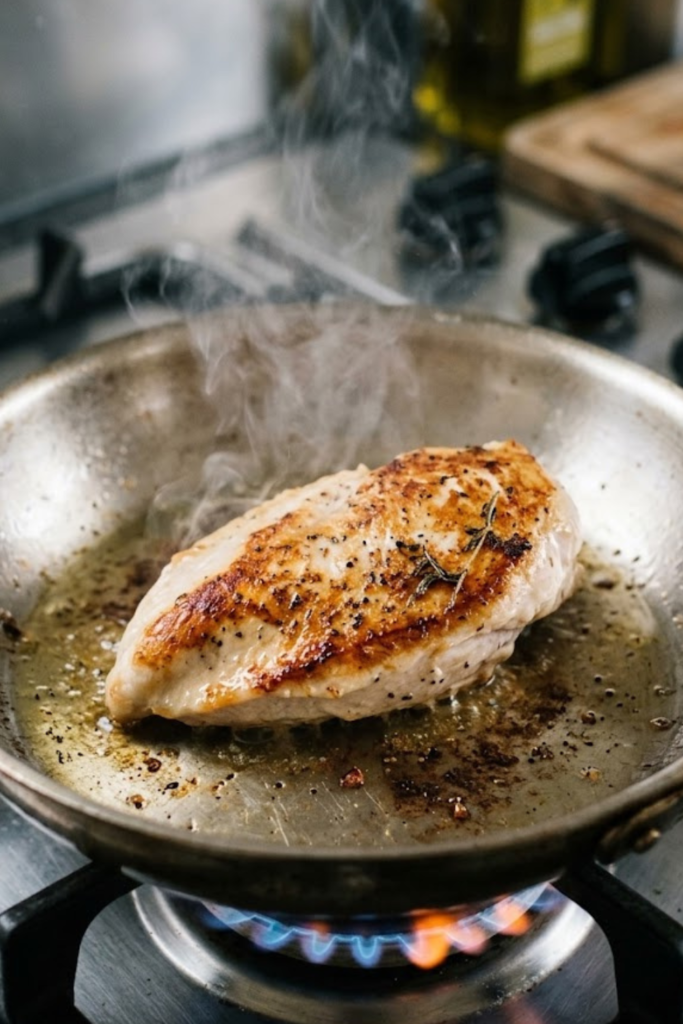
If there is one thing I’ve learned from grading hundreds of essays, it’s that you can’t rush the process. If a student rushes their work, it looks messy. If you rush your chicken breast with mild pan gravy, it looks grey and sad. Getting that perfect golden crust—what the fancy chefs call a “sear”—is the difference between a meal that’s just okay and one that makes your family actually put their phones down at the table. I had to learn this the hard way after serving a lot of rubbery chicken over the years!
Why You Need Paper Towels
This is the part most people skip because it feels like an extra step. You have to pat your chicken dry with paper towels. I mean, really dry! If there is moisture on the surface of the meat, it creates steam when it hits the hot pan. Steam makes things soft and mushy, not crispy. I tell my students that moisture is the enemy of a good crust. It’s like trying to draw with a crayon on a wet piece of paper—it just doesn’t work. Get all that water off so the heat can do its job on the meat, not the moisture.
Picking the Right Oil
I used to just grab whatever bottle was closest to the stove. Big mistake! If you use butter too early, it burns and tastes bitter. If you use fancy extra virgin olive oil, it starts smoking and makes your kitchen smell like a campfire. For a good chicken breast with mild pan gravy, you want an oil that can handle the heat, like avocado oil or even just regular vegetable oil. I usually put a little bit of butter in at the very end for flavor, but for the actual searing, stick to the high-heat stuff so you don’t set off your smoke alarm. I’ve done that twice, and trust me, it’s not a fun way to start dinner.
The “Don’t Touch” Rule
This is the hardest part for me because I’m a fidgeter. Once you put that chicken in the pan, leave it alone! If you try to flip it and it’s sticking, that means it isn’t ready. The meat will naturally release from the pan once that golden crust has formed. If you tear it off too soon, you leave all the flavor stuck to the metal. This is also how you get that “fond” I talked about earlier—those little brown bits that make the mild pan gravy taste so good. Just count to four or five minutes and resist the urge to poke at it. Your patience will be rewarded, I promise.
Whisking Up a Smooth and Mild Pan Gravy
Making the gravy is usually the part where people start to sweat and get nervous. I get it! It feels like a science experiment that could go wrong any second. But honestly, it is much easier than grading thirty essays on a Friday night. Once you have that chicken out of the pan, you are halfway to the finish line. You just need a little bit of confidence.
The Liquid Gold (Fond)
Don’t you dare wash that pan! Those little brown crusty bits stuck to the bottom are what we call “fond.” It’s a fancy word, but don’t let it scare you. It just means flavor. While the pan is still hot, I pour in about a cup of chicken broth. It will sizzle and steam like a volcano, but that is good! Use a whisk to scrape up all those bits. If you don’t do this, your chicken breast with mild pan gravy will just taste like salt and water. We want better than that for our families. We want a meal that tastes like someone actually cares about it.
Avoiding the “Lump Monster”
My biggest fail back in the day was when I just threw flour into the hot liquid. It turned into tiny little dough balls that stayed raw inside. It was gross. Now, I make a quick “slurry.” I take a little bit of butter and flour and mix them in a separate small bowl first, or I whisk the flour into some cold broth before it hits the heat. This makes sure things stay smooth. It’s like making sure your students have their pencils sharpened before the test starts—it just makes the whole process go better. If you see a lump, don’t panic. Just keep whisking!
Keeping it Mild
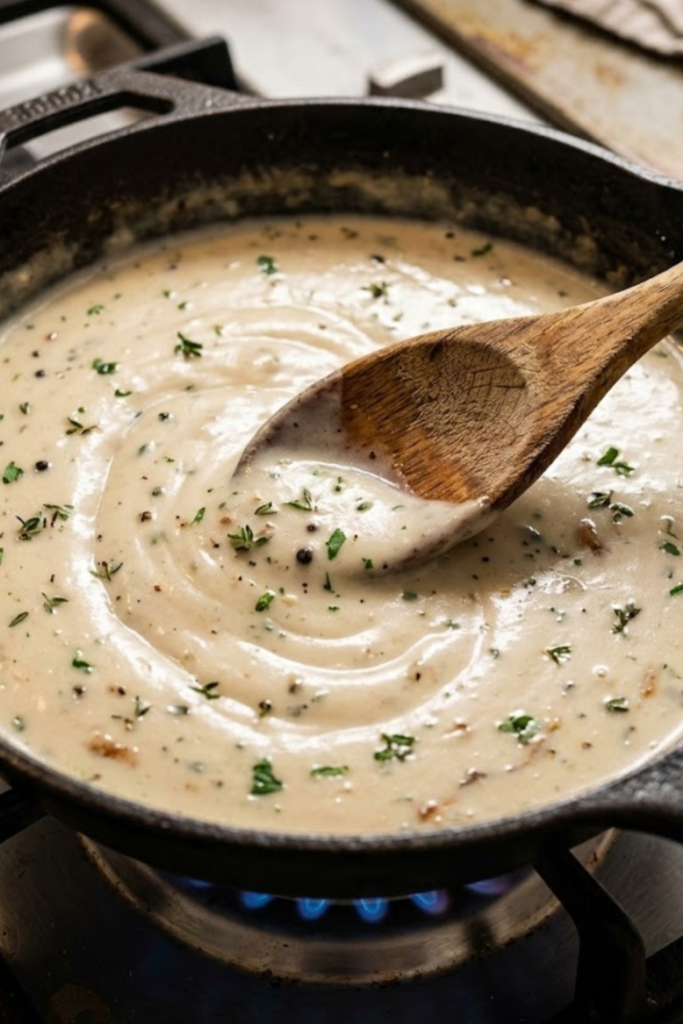
Since this is a mild gravy, we aren’t going crazy with the pepper or onions. I like to add a tiny bit of fresh thyme or even a splash of milk if I want it to be creamy. Just let it simmer for a few minutes until it gets thick enough to coat the back of a spoon. If it gets too thick, just add more broth. You are the boss of your kitchen! If I can manage a room full of 8th graders, you can definitely manage this gravy. Just keep tasting it as you go.
I really hope this helps you get a delicious dinner on the table without all the stress. Cooking should be fun, even on a Tuesday night when you’re tired from work. I know what it’s like to walk through the door after a long day of grading papers and just wanting to order a pizza because you are totally wiped out. But this chicken breast with mild pan gravy is actually faster than delivery and way more satisfying for the soul.
Plus, if you happen to have any leftovers, they make a great lunch for the next day. I usually just slice up the extra chicken and throw it over some greens or put it between two pieces of toasted bread for a quick sandwich. Don’t worry if your first try isn’t 100% perfect; even I have days where the sauce gets a little too thick because I got distracted by a phone call. Just keep practicing and you’ll be a pro in no time. It’s really all about getting comfortable with your stove and trusting your gut. If you follow these steps, you’ll end up with a chicken breast with mild pan gravy that is juicy and full of flavor every single time. No more dry chicken for you!
If you tried this recipe and liked it, please share it on Pinterest so other home cooks can find it too. It really helps out! And if you have any questions at all, just ask in the comments. I’m always here to help my “students” in the kitchen. Class dismissed!