Did you know that over 60% of home cooks struggle with dry, flavorless chicken? Honestly, it’s a total bummer when you spend time in the kitchen just to chew on something that feels like a sponge. I’ve been teaching folks how to cook for twenty years, and I’ve seen every mistake in the book. Trust me, I used to make them too! My first attempt at chicken breast with thyme butter was so dry I think I needed a gallon of water just to swallow one bite.
But listen, we aren’t doing that today. We are going to make something succulent and golden brown that will make your family think you went to culinary school. You just need a hot skillet and some fresh aromatics to make magic happen. We’re going to use real butter and fresh sprigs of herb to get that restaurant-quality finish right at home. Let’s get that pan hot and dive in!
Select the Best Poultry for Your Pan
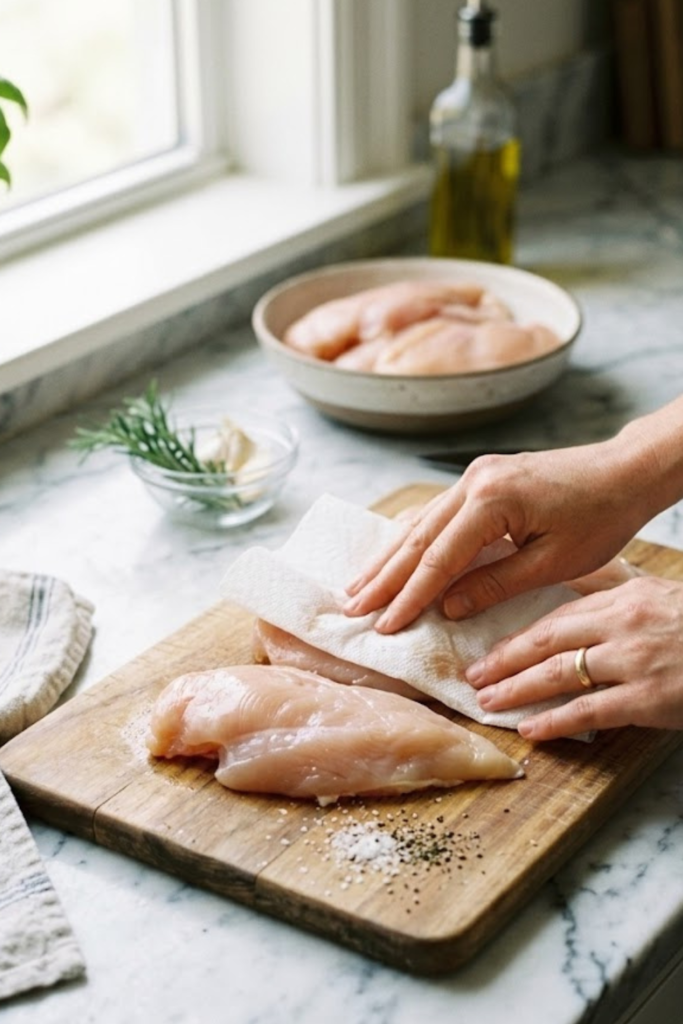
I’ve been a teacher for over twenty years, and if there’s one thing I know, it’s that you can’t build a house on a shaky foundation. The same rule applies to your dinner. If you want that perfect chicken breast with thyme butter, you have to start with a good piece of meat. You can’t just grab the first yellow foam tray you see and expect magic.
When you go to the store, look for the “air-chilled” label. Most of the cheap chicken is cooled in big tubs of cold water. That chicken sucks up that water like a sponge. When you put it in a hot pan, all that water comes out. Instead of a nice brown sear, you get a gray, boiled mess. I made that mistake once when I was hosting a big dinner for my neighbors. I bought the cheap stuff to save money, and the chicken was so watery it tasted like nothing. I was so embarrassed!
You also want to look at the color. It should be a healthy pink, not gray or yellow. And try to find pieces that are about the same size. If one is huge and one is tiny, they won’t cook at the same speed.
One little trick I teach my students is to look at the bottom of the plastic tray. If there is a big puddle of pink liquid sitting under the meat, just put it back on the shelf. That liquid is flavor and moisture that has already leaked out of the bird. You want that juice to stay inside the meat until it hits your tongue! Also, watch out for something called “woody breast.” This happens when chickens grow too fast and the meat gets really hard and stringy. I usually give the meat a little poke through the plastic; it should feel soft and springy, not like a piece of wood.
I also tell my class to check the label for “added solution.” Sometimes companies pump the chicken full of salt water just to make it weigh more so they can charge you extra. It’s a total rip-off and makes the meat taste way too salty. I always try to find organic or pasture-raised chicken if it’s on sale. The flavor is much richer, and it doesn’t shrink nearly as much in the pan.
One little trick I teach my students is to pound the chicken out. Since chicken breasts are thick on one end and thin on the other, they cook unevenly. I put them between two pieces of plastic wrap and hit them with a heavy skillet or a meat mallet. You want them to be about the same thickness all the way across. It’s a great way to get out some stress after a long day at school, too!
Choosing the right meat is the first step to making a meal that people will actually want to eat. Don’t be afraid to ask the butcher for help if you aren’t sure. They usually know which packs are the freshest. Getting the right bird makes the whole process much easier.
Prep Your Fresh Thyme and Aromatics
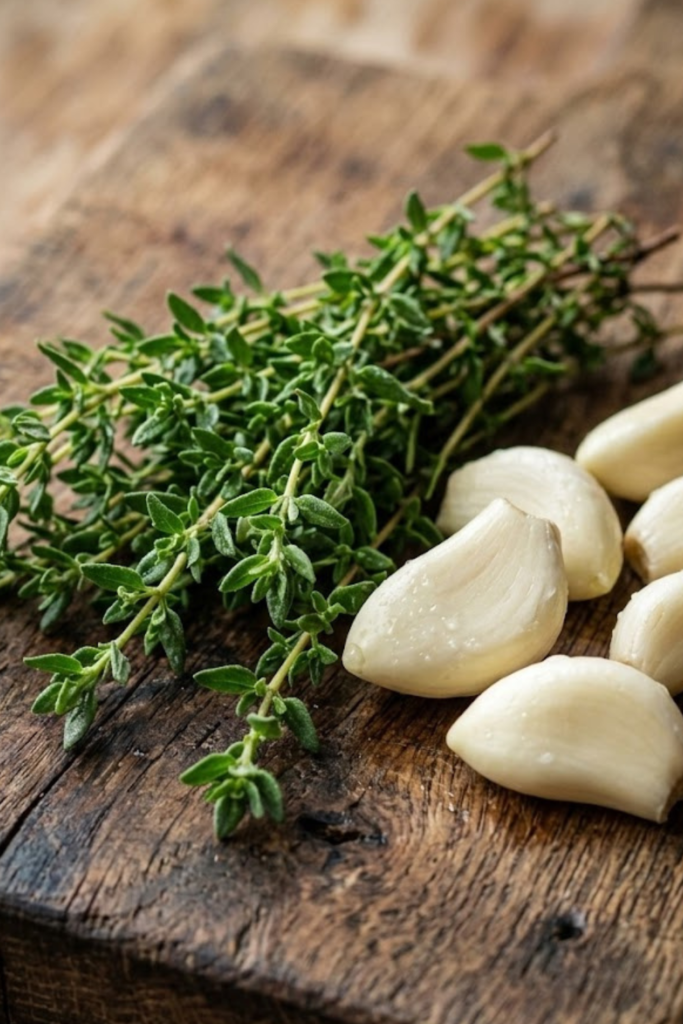
Now, let’s talk about the flavor. If you want a really good chicken breast with thyme butter, you gotta use fresh herbs. I see my students try to use that dried thyme from the little glass jars all the time. It’s okay if you’re in a pinch, but it usually tastes like dust compared to the real thing. Fresh thyme has these oils that smell like a dream when they hit the hot butter.
Stripping the leaves off the stem can be a bit of a pain if you don’t know the trick. I tell my class to hold the top of the stem with one hand and then slide their other fingers down the stem, going against the way the leaves grow. They just pop right off! If you go the other way, you’ll just break the branch and get frustrated. I once had a student try to pick them off one by one for twenty minutes—don’t be like that kid!
And then there’s the garlic. I love garlic, but you don’t want to chop it too small here. If you mince it, it will burn in the hot pan and get bitter. I just take a big knife, lay it flat on the clove, and give it a good whack with my palm. It cracks the skin right off and squashes the garlic just enough to let the flavor out.
Preparing your herbs and garlic before you even turn on the stove is a big help. It makes things way less stressful when the pan starts sizzlin’. You want everything ready to go so you aren’t running around the kitchen while your butter is browning. It’s much better to be organized than to have your meal ruined because you were busy looking for a knife.
Master the Perfect Pan-Sear Technique
Alright, let’s get that pan hot! I always tell my students that the skillet is like a stage—if it’s not ready, the show is going to be a flop. For a good sear, you need an oil that can handle the heat. I don’t use fancy extra virgin olive oil for this because it starts smoking and smelling like a burnt candle before the chicken is even done. I usually go for avocado oil or just regular vegetable oil because they don’t burn as fast.
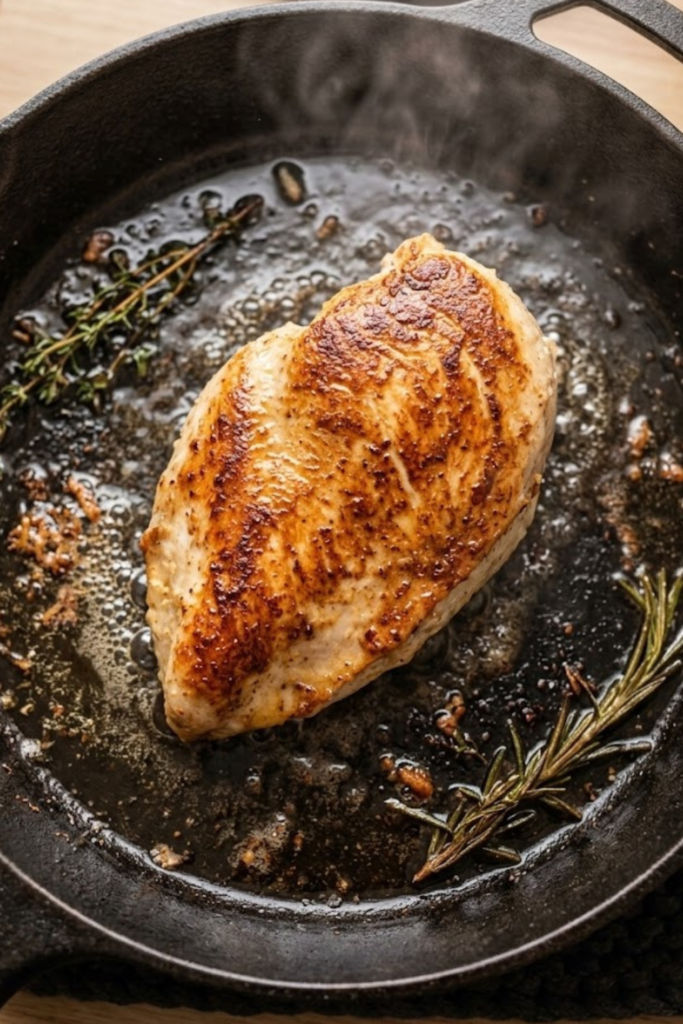
You want your cast iron skillet to be screaming hot. Not just warm, but hot enough that a drop of water dances on the surface. I remember the first time I tried to sear a chicken breast; I was so impatient. I put the meat in while the pan was still cold, and it just stuck to the bottom like glue. It was a total mess! I had to scrape it off with a spatula, and all that beautiful outer layer stayed in the pan instead of on my dinner.
When you finally lay that chicken down, leave it alone! This is the hardest part for most folks to learn. Everyone wants to keep poking and prodding the meat. If you move it too soon, you won’t get that golden-brown crust. That crust is where all the flavor lives. Just let it sit there for about five or six minutes on the first side. It will let go of the pan when it’s ready. If it’s sticking, it’s usually telling you it needs another minute. Just trust the heat, and you’ll see that beautiful color soon enough.
Getting this part right is what makes your chicken breast with thyme butter taste like it came from a professional kitchen instead of just a Tuesday night at home.
Baste with Butter Like a Pro Chef
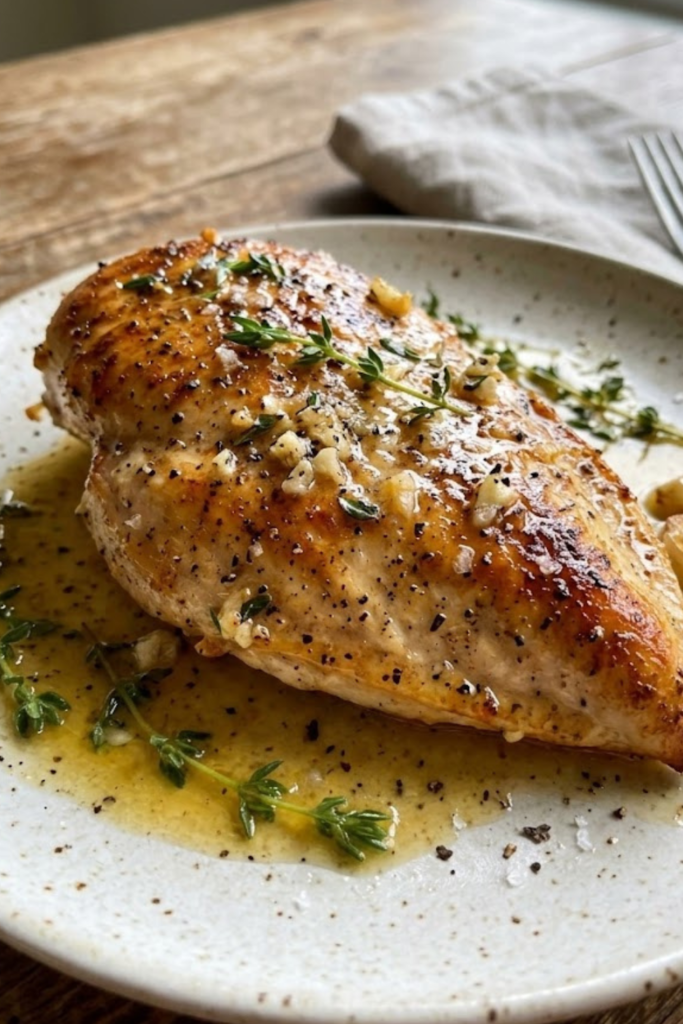
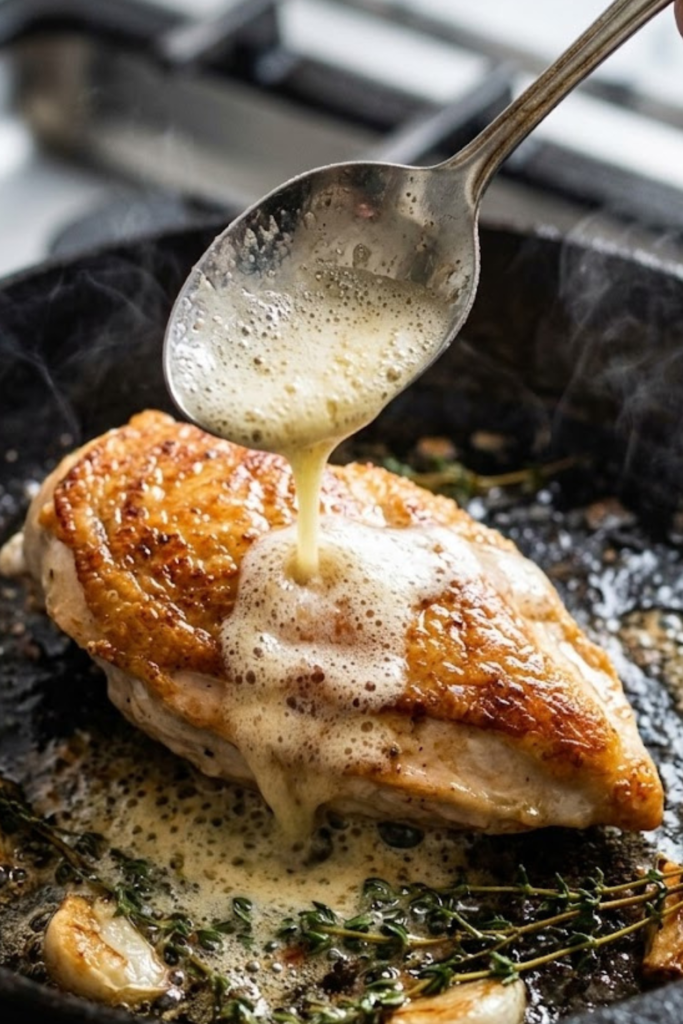
Now, this is where the magic really happens. If you want a chicken breast with thyme butter that tastes like it cost forty bucks at a steakhouse, you gotta learn how to baste. I call this the “butter bath.” Once you flip that chicken over and it’s almost done, throw in a big hunk of unsalted butter, those smashed garlic cloves, and the fresh thyme.
Don’t do this too early! If you put the butter in when the pan is at its hottest, it will turn black and smell like a burnt tire. You want it to melt and get all foamy and bubbly. I show my students how to tilt the pan just a little bit so the golden butter pools at the bottom. Then, you grab a big spoon and start splashing that hot, herb-flavored butter right over the top of the meat.
I remember a time I tried to skip this part because I was being lazy and wanted to sit down. The chicken was okay, but it didn’t have that rich, savory flavor that makes people close their eyes and say “wow.” Basting keeps the meat moist while it finishes cooking. It’s like giving the chicken a little hug of flavor. Just keep spooning it over for a couple of minutes until the meat is done. You’ll see the thyme leaves getting crispy and the garlic getting soft—it’s honestly the best smell in the world. If you do this right, your kitchen will smell better than any bakery!
Give Your Chicken Time to Rest
Alright, the chicken looks amazing, but don’t you dare cut into it yet! This is where most of my students mess up. They are so hungry they just grab a fork and dive right in. If you do that, all those juices we worked so hard to keep inside will just run out all over the plate. Then you’re left with a dry piece of meat and a sad puddle.
First, you gotta make sure it’s actually cooked. I always tell people to get a meat thermometer. Don’t just guess by looking at the color. You want the middle to hit 165 degrees. I remember one time I thought a piece was done because the outside was so brown, but the inside was still pink! That was a quick way to ruin a dinner party and make my guests nervous.
Once it hits the right temp, take it out of the pan and put it on a cutting board or a warm plate. Now, just walk away! Give it about five minutes. I know, it smells like heaven and you want to eat right now. But resting lets the meat relax. It pulls the juices back into the center so they stay there when you finally take a bite.
One thing I tell my students is to tent the chicken loosely with a piece of aluminum foil while it sits. You don’t want to wrap it tight like a birthday present, or the steam will make that golden crust get all soggy. Just a little loose tent keeps the heat in while the muscle fibers finish settling down. Also, keep in mind that “carry-over cooking” is a real thing; the temperature usually climbs a few more degrees even after it leaves the pan. I once had a student who was so impatient she cut the chicken breast with thyme butter right in the middle of the skillet. The butter and juices sprayed everywhere! It looked like a mess, and her dinner ended up tasting like a piece of dry cardboard because all the moisture escaped. Giving it those five minutes lets the herb flavors really sink into every little spot. It’s the big secret to making sure your hard work doesn’t go to waste.
If you wait, every slice will be juicy and tender. If you don’t wait, it’s like a leaky faucet. I’ve been cooking for twenty years and I still have to remind myself to step back. Go wash a dish or set the table. Your patience will be rewarded with the best chicken breast with thyme butter you’ve ever had.
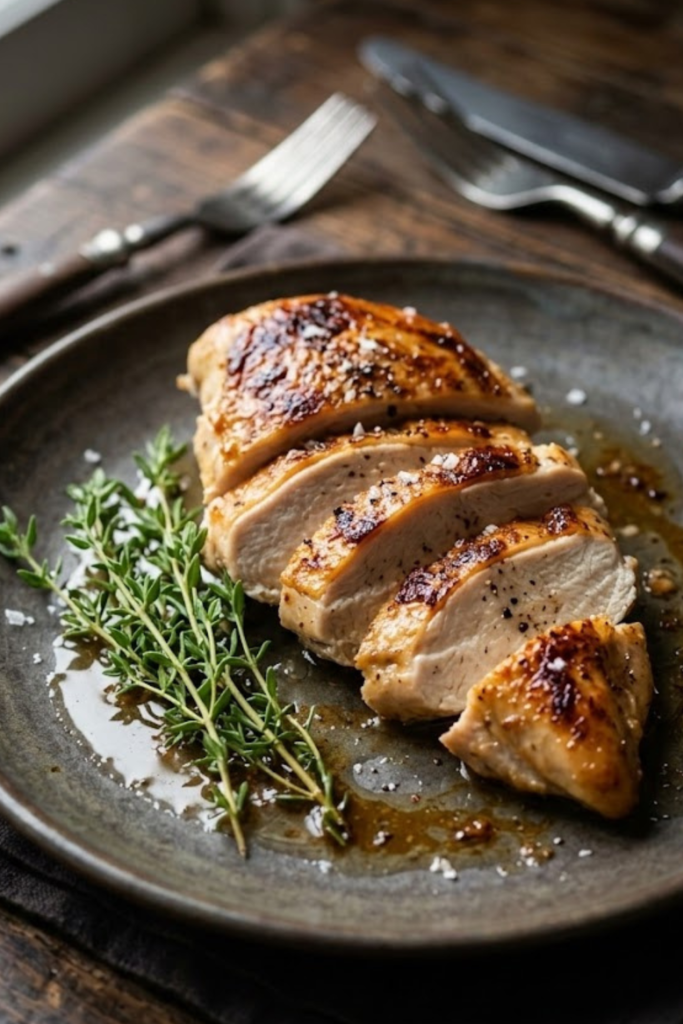
So, there you have it! Making a chicken breast with thyme butter that actually tastes good isn’t rocket science, but it does take a little bit of heart and a lot of butter. If you remember to buy the air-chilled meat, whack it until it’s even, and let it sit in that foamy herb butter, you’re going to be the hero of the dinner table. I’ve seen so many people settle for dry, boring meals because they were afraid of the heat or just in too much of a hurry. Don’t be that person. Take your time, enjoy the smell of the fresh thyme, and don’t forget to let that meat rest!
I really hope this helps you feel more confident in your kitchen. Cooking is a skill that just keeps giving, and there’s nothing better than seeing your family actually enjoy what you made. If you liked these tips, please save this post and share it on Pinterest! It helps other home cooks find these lessons so they can stop eating rubbery chicken, too. Happy cooking, and I’ll see you in the next lesson!