I’ve always said that if you can’t cook a decent piece of poultry, you aren’t living life to the fullest! Did you know that chicken thighs are actually more forgiving than breasts because they have a higher fat content? It’s true! Today, I’m sharing my secret for chicken thighs with rosemary garlic oil.
This dish is a total game-changer for your weeknight rotation. We are talking about skin so crispy it crackles and meat that stays incredibly juicy inside. I remember the first time I tried this combo; the smell of the herbs hitting the pan was so good it brought everyone into the kitchen before the timer even went off. It’s one of those recipes that looks like you spent hours on it, but it’s really just about doing the simple things right. Plus, once you get the hang of this oil, you’ll want to put it on literally everything. Let’s dive into the aromatics and get cooking!
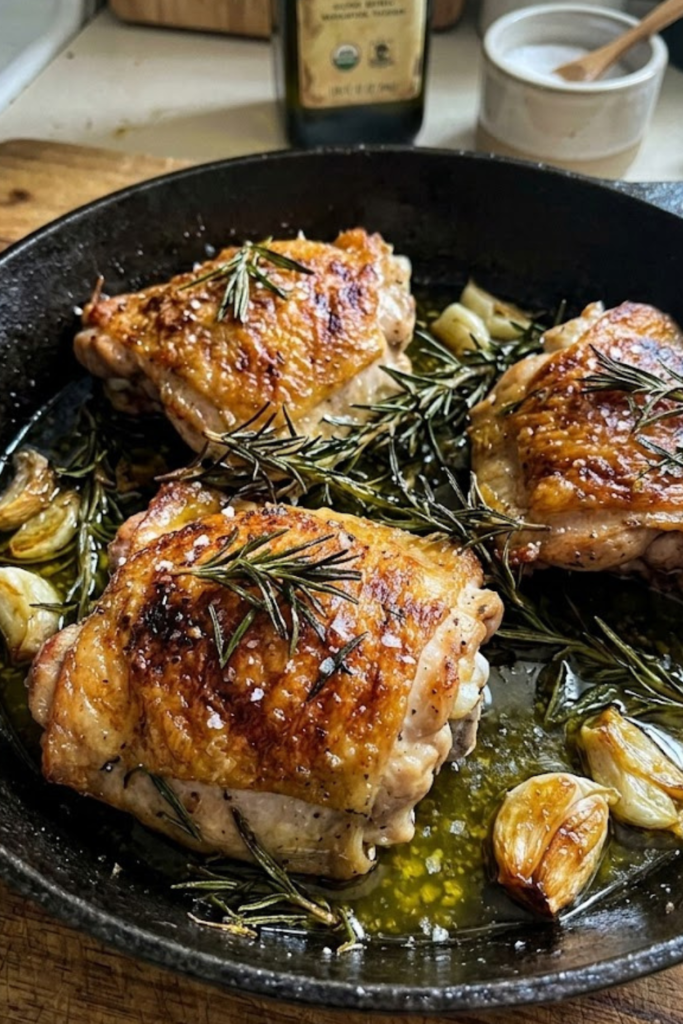
Mastering the Rosemary Garlic Oil Infusion
I’ve spent a lot of time at the stove, and if there is one thing I’ve learned, it’s that you can’t rush a good infusion. When you’re making this rosemary garlic oil, the biggest mistake people make is dropping their garlic into a hot pan. If you do that, the garlic skins turn bitter before the flavor even gets into the oil.
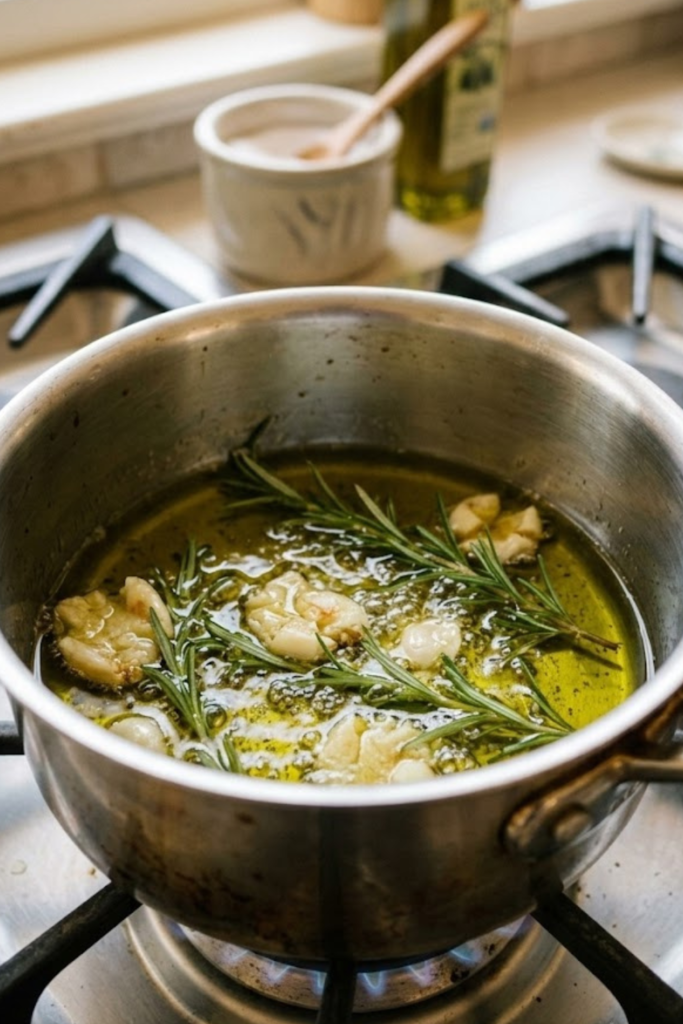
I always start with a cold pan. I put my extra virgin olive oil in there, add the smashed garlic and the fresh rosemary sprigs, and then turn the heat to low. This “cold start” method lets the oil gently pull out those aromatic compounds. You’ll know it’s working when you start to smell that amazing herb scent filling up your kitchen.
Keep the heat down low. If the garlic starts to turn dark brown, it’s getting too hot. You want a very gentle sizzle. This is also the best time to stir in a good pinch of sea salt. The salt actually helps break down the rosemary needles a bit so they release more of those oils that make the chicken taste so good. Once the oil is fragrant and the garlic is soft, you’ve got the perfect base to brush over your chicken. It’s a simple step, but it really changes the whole dish.
I usually let it sit for about five minutes off the heat before I even touch it. This extra bit of time lets the rosemary really steep like a tea bag. If you look closely at the oil, it should have a slight greenish tint from the herbs. I like to use a pastry brush to really get into all the nooks and crannies of the chicken thighs. Don’t throw away those garlic cloves either; they get all buttery and soft, so I tuck them under the chicken while it roasts. Honestly, sometimes I make a double batch of this oil just to dip some crusty bread in while the chicken is in the oven. It’s a trick that makes your house smell like a five-star restaurant without much effort. Just be patient with the flame—low and slow is the secret to getting that deep, savory flavor without any of the burnt aftertaste.
Prep Secrets for Maximum Skin Crispiness
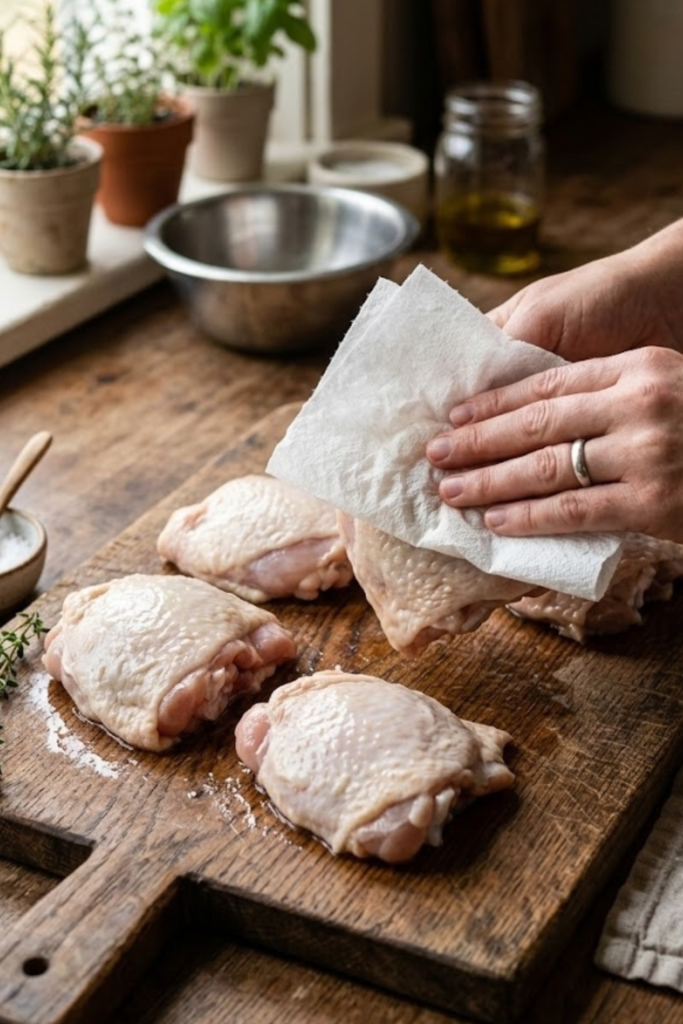
If you want that crunch that everyone fights over at the dinner table, you have to start with the skin. I’ve seen so many people take chicken straight from the plastic wrap and put it right in the oven. That is a huge mistake! All that trapped moisture turns into steam, and steam is the enemy of crispy skin.
My first rule is the “pat-dry rule.” I grab a stack of paper towels and I dry those thighs like my life depends on it. Top, bottom, and especially in the folds. Once they are dry, if I have the time, I leave them uncovered in the fridge for about an hour. It’s called air-chilling. It sounds fancy, but it just helps the skin tighten up so it can get crackly later.
I also always stick with bone-in, skin-on thighs. I know the boneless ones are faster, but the bone helps the meat cook evenly and stay juicy while the skin acts like a little shield. Plus, you need that skin to hold onto all that rosemary garlic oil we just made! If you skip the drying step, the oil will just slide right off, and nobody wants that. Take the extra five minutes to get them dry, and you’ll see a massive difference when you pull that tray out of the oven.
I usually tell my students to think of the skin like a piece of parchment paper—it needs to be totally matte, not shiny, before it hits the heat. If you see any wet spots, the oil won’t stick, and you’ll end up with patches of soggy skin. I also like to gently pull the skin back a bit and rub a tiny bit of salt directly on the meat before pulling the skin back over. This helps season the chicken from the inside out. Don’t be afraid to really get your hands in there; cooking is a hands-on job! Another trick I use is letting the chicken sit on the counter for about 20 minutes after the fridge so it isn’t ice-cold when it hits the pan. This stops the meat from tensing up and keeps it tender. It’s these small, boring steps that turn a “meh” dinner into something people ask for every single week. Trust me, the extra paper towels are worth it for that first bite of crackling skin.
Roasting to Perfection: Times and Temps
Once you’ve got that skin dry and the oil ready, the oven is where the magic happens. I’m a big believer in a high-heat start. I usually set my oven to 425°F (218°C). That initial blast of heat is what renders the fat under the skin quickly, so it doesn’t just sit there getting soggy. If you cook it too low, you’ll end up with rubbery skin, and nobody wants to eat that!
Now, don’t just guess when it’s done. I always use a meat thermometer. For chicken breasts, you’d pull them at 165°F, but for thighs, I like to go higher—around 175°F (79°C). Because thighs have more dark meat and connective tissue, they actually taste better and have a much better texture when they get a bit hotter. It makes the meat fall-apart tender while the skin stays super crispy.
One last thing—and this is the hardest part—you have to let the chicken rest. I take the cast iron skillet or tray out and let it sit for about 10 minutes. If you cut into it right away, all those juices we worked so hard for will just run out onto the plate. Give it a second to settle, and I promise it’ll be the juiciest chicken you’ve had in a long time.
I can’t tell you how many times I’ve seen folks ruin a good bird by being impatient at the finish line. While the chicken sits, those juices move back into the center of the meat, making every bite soft and flavorful. If you look at the bottom of the pan, you’ll see all those brown bits mixed with the rosemary garlic oil—that is liquid gold, so don’t you dare wash it away! I like to spoon a little bit of those pan drippings right back over the meat just before serving. It gives it a nice shine and one last hit of that herb flavor. Also, make sure you don’t tent the chicken too tightly with foil while it rests; if you trap too much steam, you’ll lose that crunch we worked so hard to get. Just let it sit out on the counter and relax. You’ve done the hard work, now you just need to wait a few more minutes for the payoff. Believe me, when you hear that first crackle of the skin under your knife, you’ll know exactly why we did it this way. It’s the kind of meal that makes you feel like a pro even on a Tuesday night.
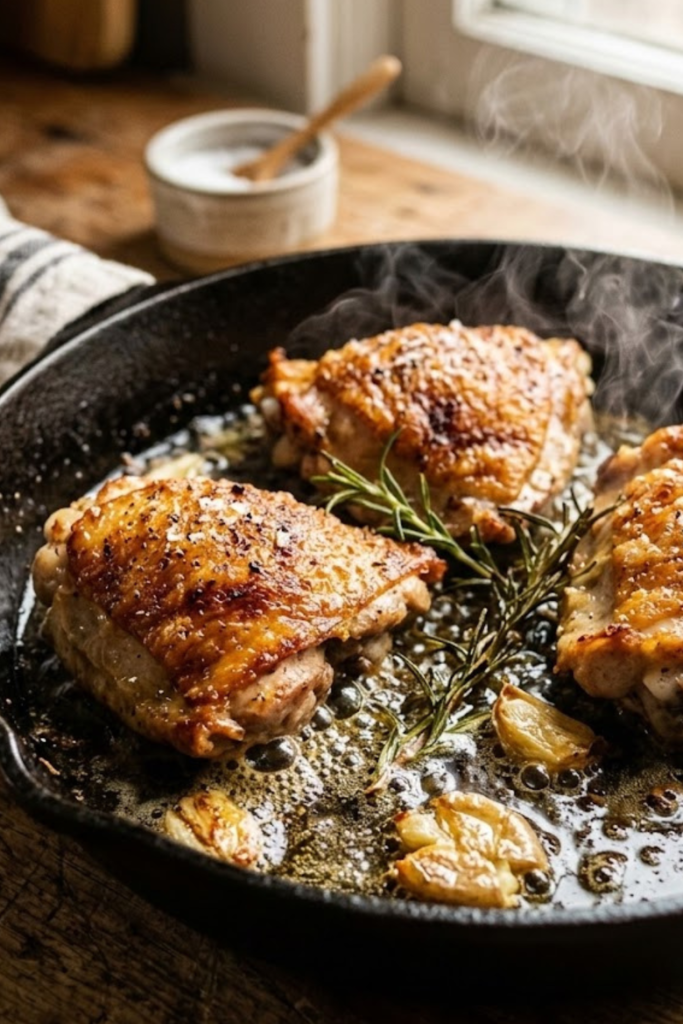
There you have it—my personal guide to the ultimate chicken thighs with rosemary garlic oil. It’s a simple technique, but it really delivers on those big, bold flavors we all crave. I’ve found that once you master that cold-start oil infusion and get the skin truly dry, you’ll never want to make chicken any other way. It’s become a total staple in my house, and I bet it will be in yours too!
I usually serve these with some roasted potatoes or a simple green salad, since the pan juices act like a built-in dressing that ties everything together. There’s something so satisfying about a meal that uses basic pantry staples to create something that tastes this gourmet. It just goes to show you don’t need fancy gadgets or expensive ingredients to feed your family well. Even if you’re a beginner, these little tips will make you feel like a pro in no time.
If you give this recipe a try, I’d love to hear how it turned out for you. Did you get that perfect crunch? Did your kitchen smell like a dream? Please share this post on Pinterest so other home cooks can find their new favorite dinner! Looking at those photos of golden chicken is enough to make anyone hungry, and it helps more people discover that cooking great food at home isn’t as hard as it looks.