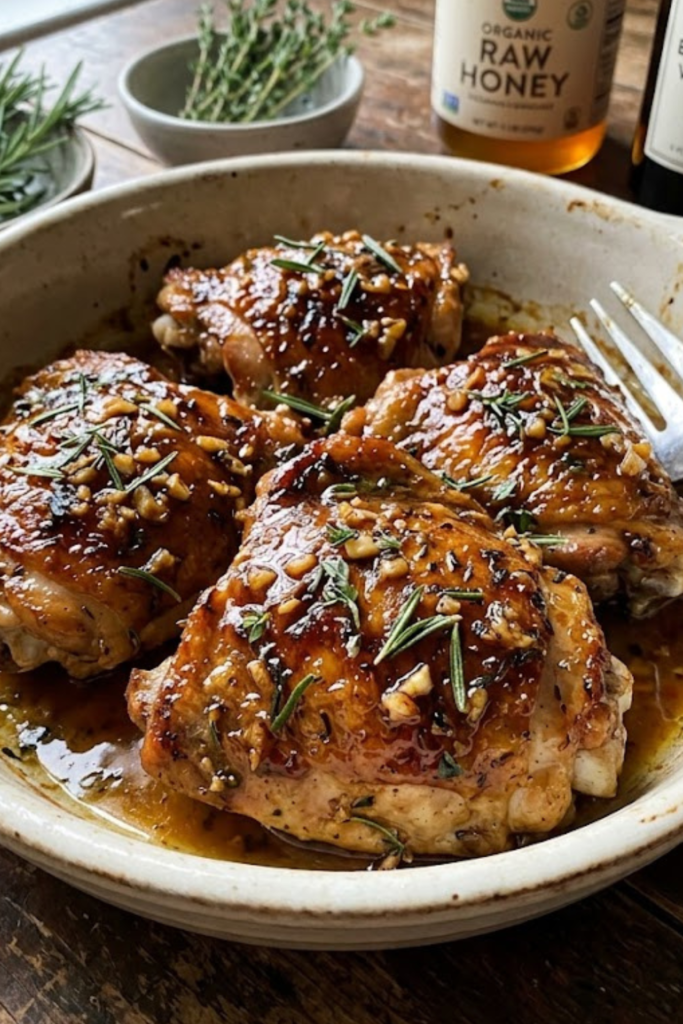
Did you know that chicken thighs actually have about 20% more flavor-carrying fat than chicken breasts? Honestly, I used to be a “breast-only” cook until I realized I was missing out on all that juicy goodness! I remember the first time I tried making chicken thighs with rustic herb glaze; I accidentally used way too much dried rosemary and it tasted like I was chewing on a pine tree. It was a total kitchen fail, but it taught me exactly how to balance fresh herbs with the right amount of sweetness.
Now, I’m obsessed with getting that skin so crispy it crackles when you bite into it. This recipe isn’t fancy, but it feels like a warm hug on a plate. We’re going to dive into the best way to sear these babies and how to make a glaze that sticks to your ribs (and your heart). Let’s get cooking because your kitchen is about to smell like a dream!
Picking the Best Herbs for Your Glaze
Learning the Hard Way with Herbs
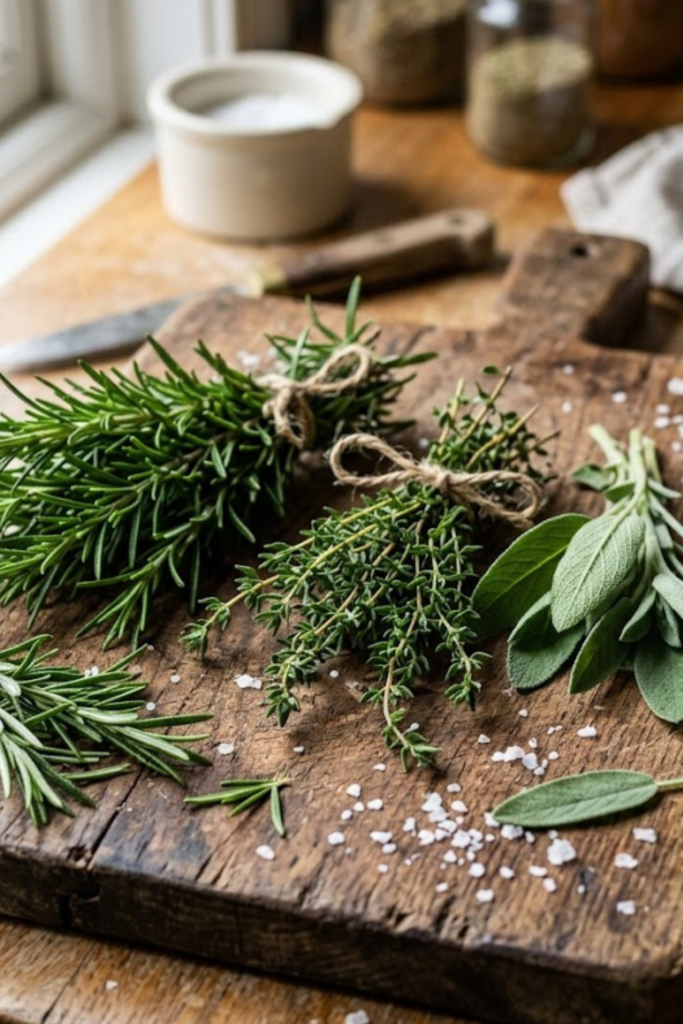
I used to think that “herbs are herbs,” but boy, was I wrong. One time I used an old jar of dried thyme that had been in the back of my pantry since… well, let’s not say. The chicken ended up tasting like dusty hay! Now, I always tell my students to go for fresh bundles if they can. You can really tell the difference in the smell alone; fresh herbs smell like a garden, while the old bottled stuff often just smells like a spice cabinet.
When you are at the store, you want to look for sprigs that aren’t wilting or turning black. The stems should be firm, and the leaves should look perky. If you can’t find fresh, you can use dried, but remember to use half the amount because that stuff is way stronger and can get bitter fast. I usually grab a handful of rosemary and thyme from my little windowsill garden. It makes me feel like a pro even when I’m just in my pajamas and haven’t had my coffee yet.
To get the most flavor, you need to bruise the leaves a bit. Just give them a rough chop with a sharp knife; don’t be too perfect about it. You want to see those green oils hitting the cutting board. A bit of the soft stems in there actually adds to that “rustic” vibe we want. If you want to take it up a notch, toss in a few sage leaves. Sage has this earthy, cozy flavor that makes the whole house smell like Thanksgiving, no matter what month it is. It balances the sweetness of the honey perfectly.
The Secret to That Perfect Crispy Skin
Don’t Make My Soggy Skin Mistake
I’m going to be real with you—my biggest flop was trying to cook “crispy” chicken while the meat was still damp from the package. I thought the heat would just steam the water away and then start frying. Nope! It didn’t fry; it basically boiled in its own juices. It was gross and rubbery, and my husband just kind of poked at it with his fork. Since then, I’ve learned that paper towels are your best friend.
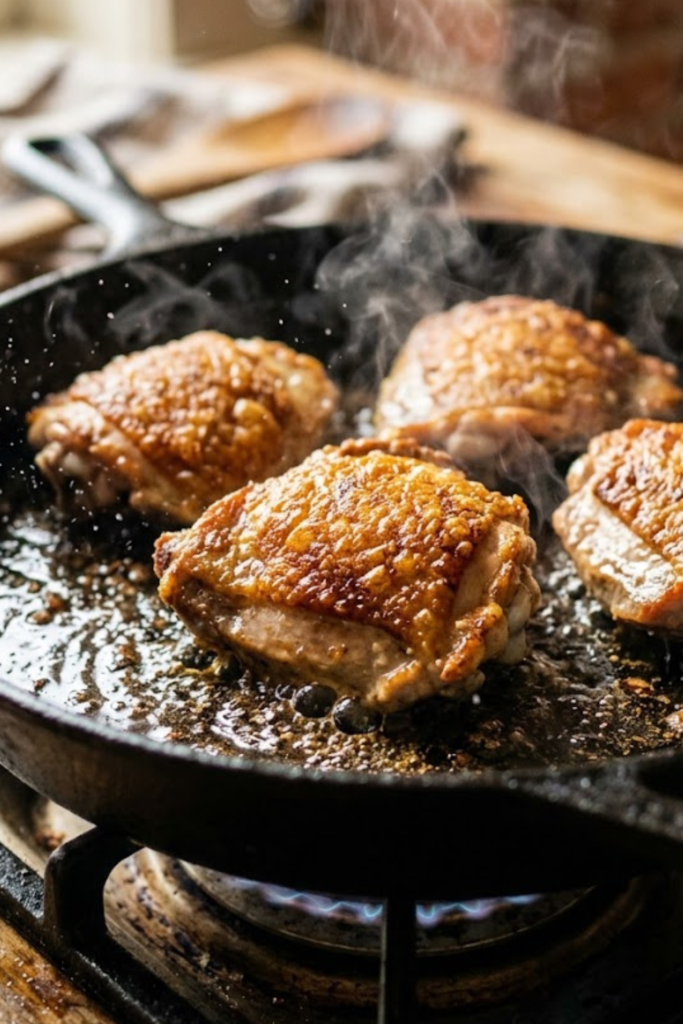
You need to pat that skin until it’s bone dry. Like, seriously dry. If you have time, leave the chicken uncovered in the fridge for an hour to air dry even more. This helps the skin tighten up before it ever hits the heat. When it’s time to cook, I like to put the thighs skin-side down in a heavy skillet. Cast iron is great because it holds heat so well and gives you that even browning across the whole surface.
A trick I learned from a chef friend is to start the chicken in a pan that isn’t screaming hot yet. This lets the fat under the skin melt slowly—we call that rendering—so the skin gets thin and crunchy instead of just burning on the outside while staying fatty underneath. Don’t touch them! You might be tempted to peek, but every time you lift the meat, you lose that contact with the pan. Let that fat melt away and the skin turn into a golden brown crust. It takes about 8 to 10 minutes, but the wait is worth it.
If you try to flip them and they stick to the pan, they aren’t ready yet. Just let them do their thing until they release naturally. You’ll see the edges start to turn dark and crispy, which is your cue that the magic is happening. Another tip is to avoid crowding the pan; if you put too many thighs in at once, the temperature drops and you’re back to steaming instead of frying. Keep some space between each piece so the air can circulate. Once they flip easily, you’ll see a crust that looks like it came from a fancy restaurant. This foundation is what makes the rustic herb glaze stay on the skin without making it soggy again.
Building the Glaze: Sweet, Salty, and Bold
Sticky Situations and Glaze Triumphs
Making a glaze is kind of like a science project, but you can eat the results. I remember one time I added the honey too early and it turned into black carbon in seconds. My kitchen smelled like a campfire for three days! Now, I wait until the chicken is almost done before I pour that liquid gold over it. You want the chicken cooked through first so the sugar in the honey only has to bubble for a minute or two.
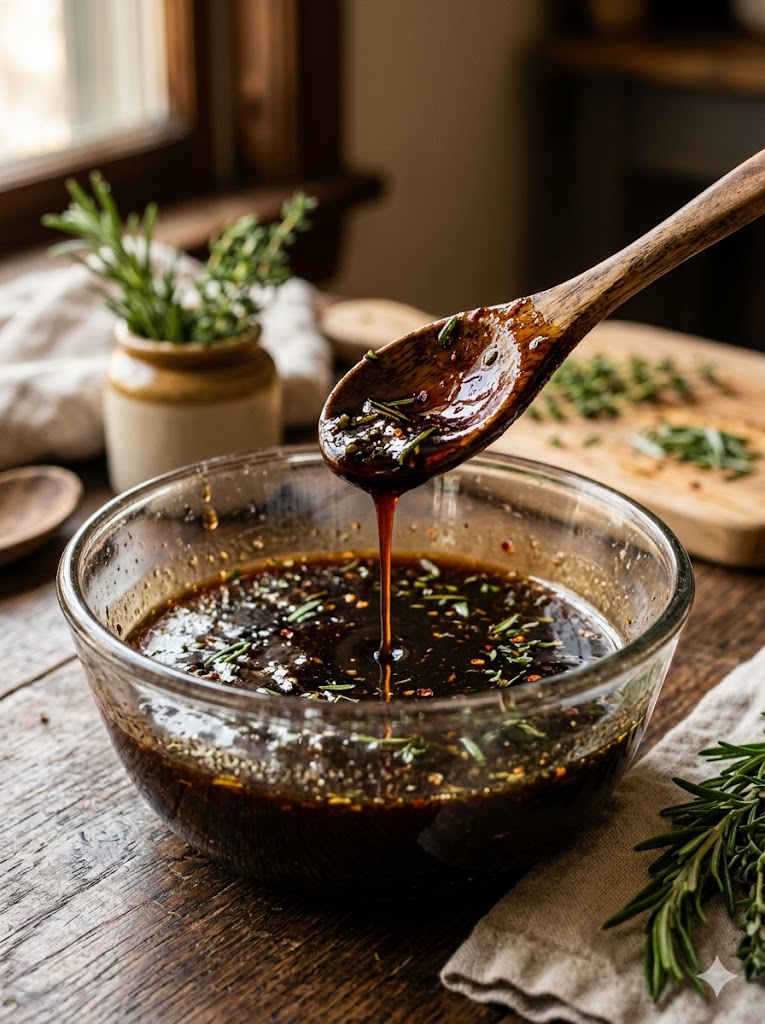
I mix about 1/4 cup of honey with two tablespoons of balsamic vinegar. Throw in some minced garlic and a spoonful of mustard too. The mustard is the secret ingredient—it has a little kick that stops the honey from being too sickly sweet. It’s got to be thick enough to coat a spoon. When you pour it in, it’ll bubble up like crazy. That’s the magic happening right there. Use a spoon to keep basting the chicken. You want every nook and cranny filled with that sweet and herb-filled sauce. It gets all tacky and delicious.
As the heat hits the mixture, the vinegar reduces and loses its sharp bite, leaving behind a deep, rich flavor that pairs perfectly with the rosemary and thyme we talked about earlier. I like to tilt the pan slightly so the glaze pools at the bottom, then I just keep spooning it over the skin until it looks like a shiny piece of mahogany furniture. If the sauce gets too thick too fast and looks like it might seize up, don’t panic—just add a tiny splash of water or chicken broth to loosen it back up.
You should see the glaze start to cling to the chicken rather than just sliding off into the pan. This is when the garlic starts to caramelize and smell amazing. Be careful not to let the heat stay too high at this stage; you want a gentle simmer, not a rolling boil. If you have a meat thermometer, check that the inside of the meat is at least 165 degrees while you’re doing this. Once the chicken is fully coated and the glaze is thick enough to leave a trail when you run your spoon through it, take it off the burner. Letting it sit for just two minutes before serving helps the glaze set so it doesn’t all run off onto the plate. It’s that final sticky layer that really makes people think you spent hours in the kitchen instead of just thirty minutes.
We’ve covered everything from picking the right herbs to getting that skin perfectly crunchy for your chicken thighs with rustic herb glaze. It’s all about being patient and not being afraid to get a little messy in the kitchen. I hope this helps you make a dinner that your family actually asks for seconds of!
Cooking is a journey, and even if your first try isn’t 100% perfect, the house will still smell amazing and those flavors will be way better than anything from a box. Don’t be afraid to experiment with different herb ratios next time—maybe add a little extra rosemary if you love that earthy scent. I’ve found that the more you practice that pan-searing technique, the more confident you’ll feel with other meats too. It’s such a great skill to have in your back pocket for busy weeknights when you want something that feels special but doesn’t take all night.
I really think the sticky, sweet balsamic glaze is what ties it all together, especially when it mingles with the chicken juices on the plate. Try serving these over some mashed potatoes or a bit of crusty bread to soak up every last drop of that sauce. If you have leftovers, they actually taste pretty great cold on a salad the next day, though the skin won’t be as crackly.
If you loved this guide, please save it and share it on Pinterest so others can find the secret to the best chicken ever! I’d love to hear how yours turned out—did you get that skin crispy or did the glaze steal the show? Leave a comment below and let’s chat about your kitchen wins!