Listen, I’ve burned more “garlic” chicken than I’d like to admit. Once, I actually set off the smoke alarm because I used too much dried rosemary and it basically turned into a campfire in my oven! Did you know that over 60% of home cooks struggle with getting a crust to actually stick to the meat? It’s frustrating when you want that crunch but end up with a soggy mess. But after years of trial and error in my own kitchen, I finally cracked the code for a chicken with herb garlic crust that stays crispy and keeps the meat dripping with juice. Today, I’m sharing all those “oops” moments so your dinner is a total win!
My Secret Ingredients for the Best Herb Crust
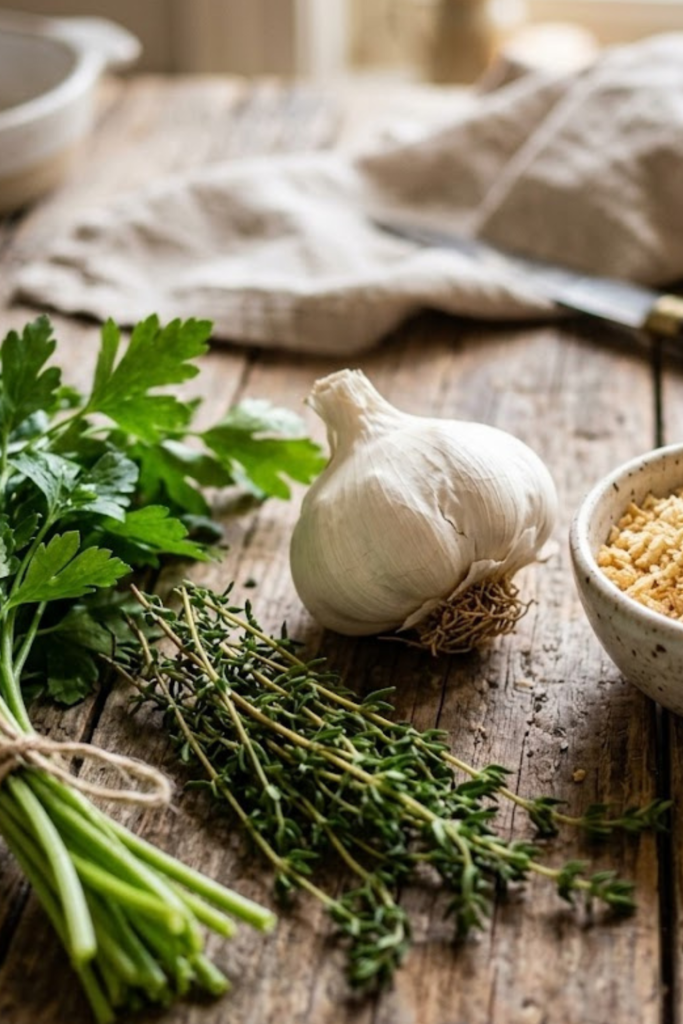
I remember standing in the spice aisle at the grocery store for like twenty minutes once, just staring at all the little glass jars. I used to think that dried herbs were basically the same as fresh ones, just easier to store. Boy, was I wrong! When you are making a chicken with herb garlic crust, the herbs are the stars of the show, and they need to be handled right.
Fresh vs. Dried: Which is Better?
I used to reach for those old spice jars that had been sitting in my cupboard since my first apartment. But honestly, if your dried rosemary looks like dusty lawn clippings, it’s going to taste like it too. Fresh herbs have a bright, grassy smell that makes the whole house smell amazing while the chicken cooks.
If you’re in a rush and have to use dried, remember that it’s way stronger than fresh. A good rule of thumb I tell my students is to use one tablespoon of fresh for every teaspoon of dried. But for this specific crust, try to get the fresh stuff. It stays green and doesn’t turn into little black specs in the oven.
The Garlic Ratio
Garlic is tricky. I’ve had many nights where I thought “more is better” and ended up with a crust that was way too sharp. Also, if you chop the garlic into tiny pieces, it usually burns in the pan before the meat is even cooked through. Burnt garlic is bitter and just ruins the whole meal.
For the perfect flavor, I use about 3 or 4 medium cloves. Instead of mincing them into a paste, I give them a rough chop. This way, the garlic bits get toasted and golden rather than charred. It gives you a nice punch of flavor without that burnt aftertaste.
The Breadcrumb Breakdown
I used to use the very fine, powdery breadcrumbs you get in the blue canister. They are fine for meatballs, but for a crispy crust? They usually turn into a soggy paste. Switching to Panko was a total game-changer for me.
Here is the mix I use for the crunchiest results:
- 1 Cup Panko Breadcrumbs: These are flaky and light, which helps them stay crispy.
- 1/2 Cup Grated Parmesan: This adds a salty kick and helps the crust brown.
- 2 Tablespoons Fresh Parsley: Chopped fine to add color.
- 1 Teaspoon Thyme: Fresh leaves pulled right off the stem.
Mixing the Parmesan in is a little trick I learned from my neighbor. The cheese melts just a bit while it cooks, acting like a tasty glue that holds the herbs and crumbs together. It makes the crust stay on the chicken instead of falling off the second your fork hits it. Use this combo, and you’ll see exactly what I mean about that “shatter-crisp” texture.
How to Make the Crust Actually Stick
There is nothing more annoying than spending twenty minutes coating your chicken, only for the whole crust to slide off in the pan like a wet sock. I’ve done it a hundred times! One time, I was trying to make this chicken with herb garlic crust for my sister’s birthday, and the coating just stayed in the pan while the chicken came out totally naked. It was so embarrassing. I’ve learned a few tricks since then that make sure that crust stays right where it belongs.
The “Pat Dry” Rule
The biggest lesson I learned is that moisture is the enemy of a good crust. If your chicken is wet from the package, the flour won’t stick. If the flour won’t stick, the egg won’t stick. And if the egg won’t stick… well, you get the idea. I take a big stack of paper towels and I press down on the chicken until it’s really, really dry. Don’t be shy about it! You want it to feel almost tacky to the touch.
The Triple-Dredge Method
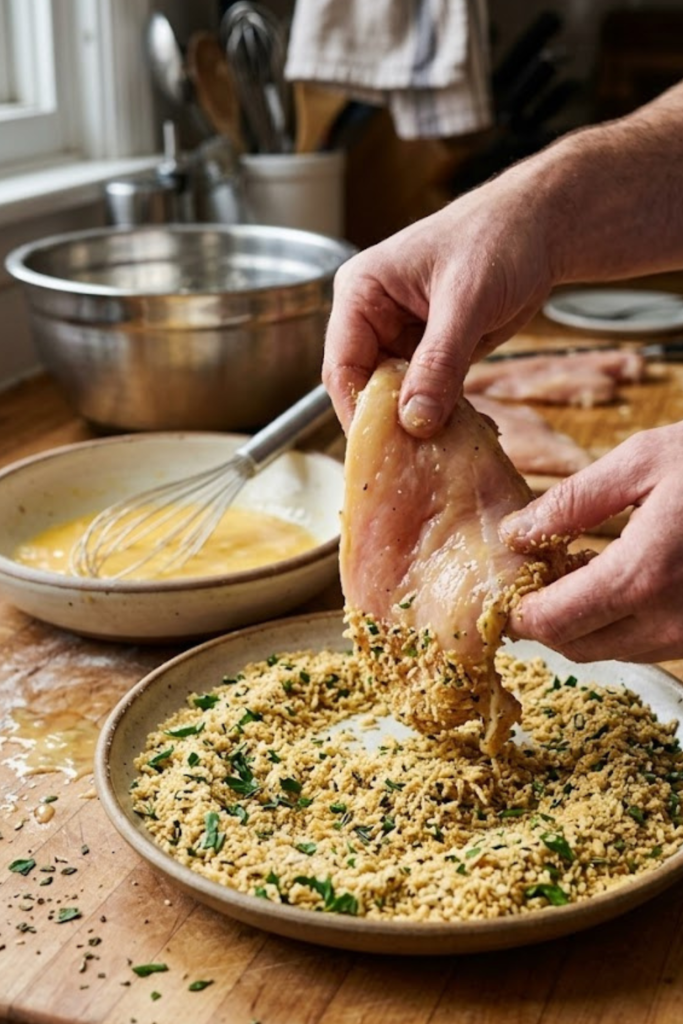
I call this the 1-2-3 step. You need three shallow bowls or plates set up in a row. It makes the whole thing go faster.
- The Flour: I just use plain all-purpose flour with a little salt and pepper. This acts like a primer for paint. It gives the egg something to grab onto.
- The Egg Wash: I beat two eggs with a tiny splash of water. This is the glue.
- The Herb Mix: This is your Panko and garlic mix we talked about before.
I use one hand for the “dry” steps (flour and crumbs) and one hand for the “wet” step (the egg). If you use both hands for everything, you end up with “club hand” where your fingers are covered in thick dough. It’s a mess to clean up! Also, once you press the chicken into the crumbs, give it a firm pat so they really sink into the meat.
Oil Temperature
One more thing: make sure your oil is hot before you put the chicken in. If the oil is cold, the breadcrumbs just soak up the grease and get soggy. I usually drop a single breadcrumb into the pan to see if it sizzles. If it bubbles and dances around right away, you’re ready to go. You want that instant “crrr-shhh” sound when the chicken hits the pan. That heat is what sears the crust onto the chicken immediately so it doesn’t fall apart when you flip it. If you’re patient with the pan, you get that golden finish every time.
Avoiding Dry Meat: Tips for 2026
There is nothing sadder than a dry chicken breast. I used to just poke the meat with my finger and “guess” if it was done. Spoiler alert: I was usually wrong almost every time. One night I served my family chicken that was basically cardboard. My husband was so nice about it, but I could see him struggling to swallow! That’s when I bought a digital meat thermometer, and it changed my life for the better. If you want your chicken with herb garlic crust to stay juicy, you have to stop guessing.
Why 165°F is the Magic Number
For a long time, I thought I had to cook chicken until it was white all the way through and kind of stiff. I was so scared of undercooked meat that I went way too far the other way. Now I know that 165 degrees Fahrenheit is the goal. But here is the secret: I usually pull my chicken out of the pan or oven when it hits 162 degrees.
The heat keeps rising for a few minutes after you take it off the heat. This is called “carryover cooking.” If you wait until it’s 165 in the pan, it will probably hit 170 by the time you eat it, and that’s when it starts getting tough. Using a thermometer makes sure you get it right every single time without any guesswork.
The Five-Minute Wait
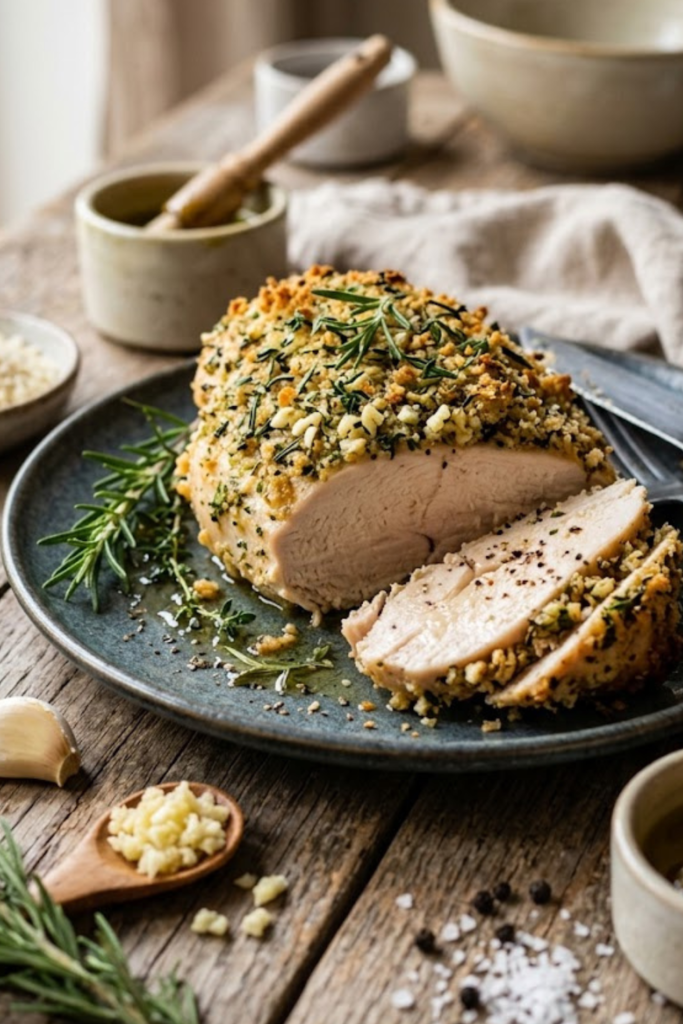
I know it smells amazing and you want to eat right away, but you have to let the meat rest. I used to slice into it immediately because I was hungry. All the juices would just run out onto the plate, leaving the meat dry. If you wait about five minutes, those juices settle back into the meat. It’s a small thing, but it makes a huge difference in how the chicken with herb garlic crust actually tastes. Just set a timer and go set the table or something to keep your hands busy!
Oven vs. Stovetop
I’ve found that the best way to cook these is a mix of both. I like to sear the chicken in a hot pan for about 3 minutes on each side just to get that crust golden and pretty. Then, I put the whole pan into a 400-degree oven for about 8 to 10 minutes.
The stovetop gives you the crunch, and the oven finishes the inside gently so it doesn’t burn the garlic on the outside. If you try to do the whole thing on the stove, the crust usually gets too dark before the middle is safe to eat. This combo is the best way to get that perfect balance. It makes a big difference for your weeknight dinner plans.
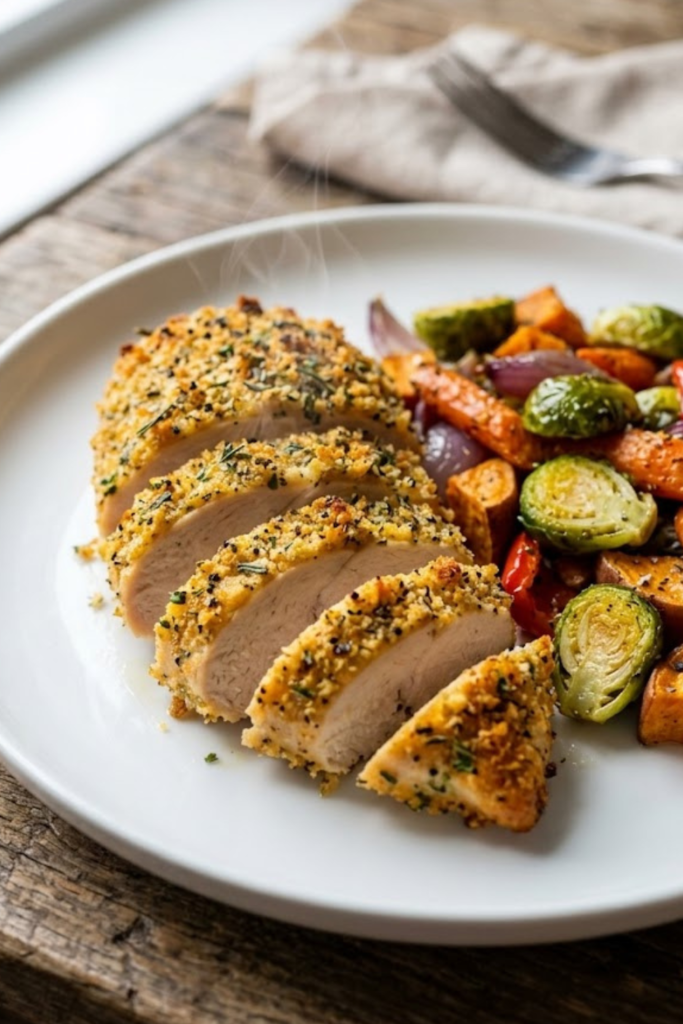
Alright class, that’s everything you need to know! Making a really good chicken with herb garlic crust isn’t as hard as it looks, it just takes a little bit of practice and following the steps. Just keep those herbs fresh, dry that chicken like your life depends on it, and please… don’t overcook it! Using a thermometer is the best way to make sure your family isn’t chewing on rubber for dinner.
I’ve made all these mistakes over the years so you don’t have to. Once you get that golden, crunchy crust and that juicy middle, you’ll feel like a total pro in the kitchen. It’s such a good feeling when everyone actually asks for seconds, right? If you found these tips helpful, please save this post to your Pinterest boards! It really helps me out and helps other home cooks find these tips too. See you in the next lesson!