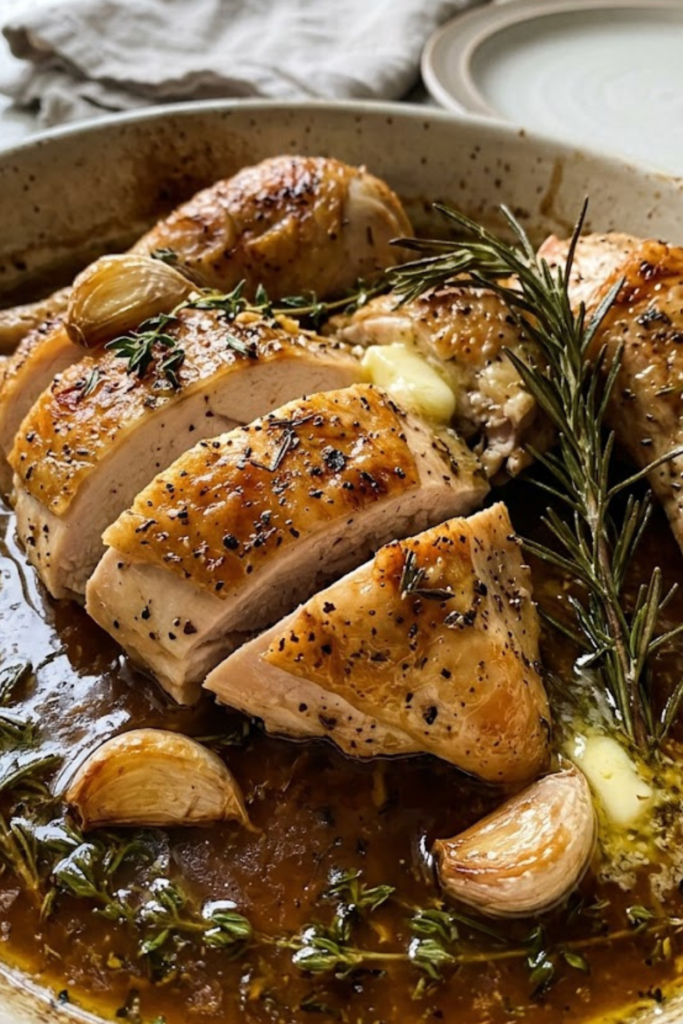
Listen, I have dried out more chicken breasts than I care to admit. It’s embarrassing! Did you know that nearly 50% of home cooks struggle with keeping poultry moist? I used to be one of them until I discovered the magic of chicken with herb pan juices.
There is just something so satisfying about hearing that sizzle in the pan. I’m a teacher by trade, and I always tell my students that cooking is just a delicious science experiment. You take some fresh rosemary, a bit of butter, and those glorious chicken drippings, and suddenly you’re a gourmet chef. This recipe is my go-to when I want to impress my family without spending five hours in the kitchen. Let’s get into how to make this bird sing!
Picking the Best Herbs for Your Pan Sauce
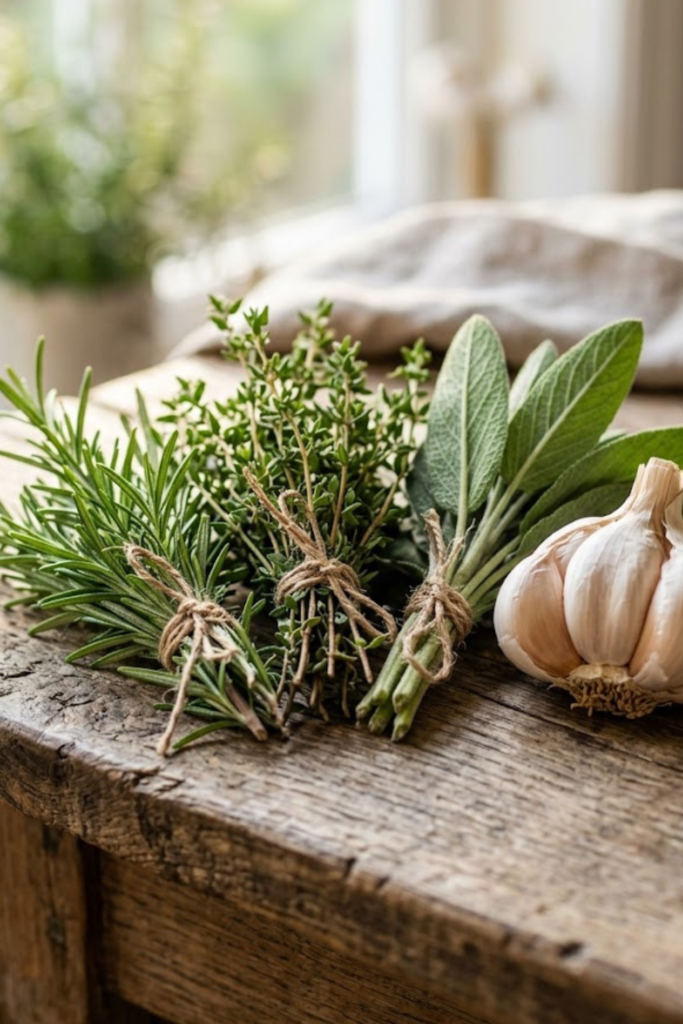
I’ve been teaching for a long time, and if there is one thing I tell my students, it’s that fresh is usually better. I used to think I could just use that old jar of dried rosemary from the back of my pantry. Big mistake! It tasted like I was eating dusty pine needles. Now, I always go for fresh sprigs. When you make chicken with herb pan juices, the herbs are the real stars.
I really like using rosemary, thyme, and maybe a little sage. These are “woody” herbs. They can stand up to the heat of the pan without falling apart. If you use something soft like parsley or cilantro too early, it just turns into a brown mush. I usually just toss the whole stems right into the pan with some butter. The heat makes the oils come out, and your whole house will smell like a fancy restaurant.
Another thing I learned the hard way? Don’t be stingy with the garlic. I use about three or four cloves and just smash them with the side of my knife. You don’t even have to chop them perfectly. Just get them in there so they can flavor that butter. If you’re worried about the herbs burning, just keep an eye on the color. You want them to look bright and smell good, not turn black. It takes a little practice, but once you get the hang of it, you’ll never go back to the dried stuff. Use what you have in your garden, and you will see how much better it tastes!
The Secret to Crispy Skin and Flavorful Drippings
You want to know my biggest “oops” moment in the kitchen? I once tried to cook a fancy meal for my neighbors and served them chicken that looked like it had been boiled in a puddle. It was a slimy, rubbery mess that made me want to crawl under the table and hide. That night, I learned that you can’t get a good chicken with herb pan juices if the skin is wet when it hits the pan.
I’m a teacher, so I usually have my life together, but that dinner was a total fail. I realized I had skipped the most important step: drying the bird. Now, I tell everyone to use an entire roll of paper towels if they have to. You gotta pat that thing down until it feels like parchment paper.
If you have time, let the chicken sit in the fridge uncovered for an hour. This is a pro tip I picked up after years of soggy skins. It’s basically a dry brine that helps the skin get super thin and crunchy. When you finally make your chicken with herb pan juices, that crunch is going to be the best part.
My Favorite Heavy Metal
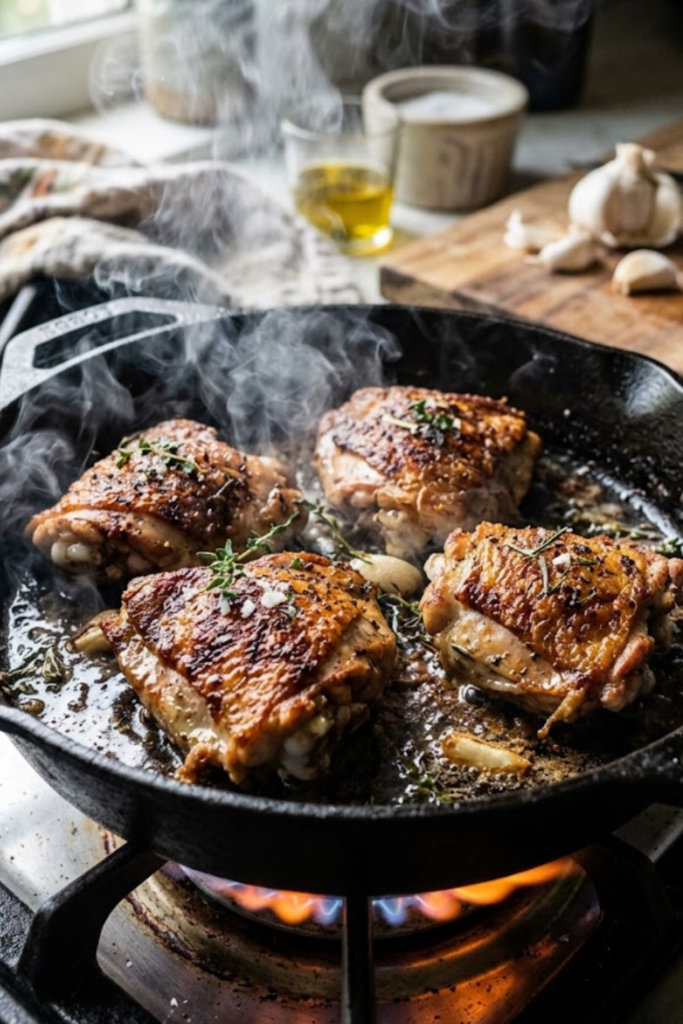
Choosing the right pan is another big deal. I used to use those thin, cheap non-stick pans because they were easy to wash. But those pans are terrible for getting a good sear. Now, I am obsessed with my cast iron skillet.
It’s heavy and holds heat like a champ. When I’m making chicken with herb pan juices, I want that pan screaming hot before the meat even touches it. I usually add a little splash of oil with a high smoke point, like avocado oil, so I don’t set off the fire alarm. Again, I’ve done that before, and it’s not fun explaining that to the fire department.
Don’t move the chicken once you put it in! This is where most people mess up because they get impatient. I used to poke and prod the meat every thirty seconds like I was checking a pulse. Just leave it alone for at least five to seven minutes.
The chicken will actually tell you when it’s ready to flip. It “releases” from the bottom of the pan once the skin is crispy. If you try to flip it and it sticks, just wait another minute. Trust the process, even if it feels like forever.
Temperature Control and Fond
You also need to watch your heat so you don’t burn the “fond.” That’s just a fancy word for the brown bits stuck to the pan. Those bits are the soul of your chicken with herb pan juices. If they turn black, your sauce will taste like a literal campfire, and not in a good way.
I usually keep the heat at a solid medium-high. If the pan starts smoking too much, I just slide it off the burner for a second. It’s all about staying calm and not rushing things. Cooking is supposed to be fun, not a stressful test.
One time, I forgot to check the internal temp and the middle was still raw. Yikes! Now I always use a digital thermometer to hit 165 degrees. It’s the only way to be sure you aren’t serving “chicken tartare.” Believe me, nobody wants that at their Sunday dinner.
When you see those golden drippings pooling in the skillet, you know you’re on the right track for amazing chicken with herb pan juices. It’s a total triumph when that skin shatters like glass when you bite into it. You’ll feel like a total rockstar in the kitchen, I promise.
Deglazing: Turning Scraps into Liquid Gold
Deglazing sounds like something only people with tall white hats do at fancy culinary schools. But honestly, it’s just a big word for cleaning your pan with some liquid. After you take the chicken out to rest, you’ll see all those dark brown bits stuck to the bottom of the skillet. Don’t you dare wash those away in the sink! That is where all the concentrated flavor for your chicken with herb pan juices actually lives.
I remember one time I was so tired after a long day of grading papers that I just scrubbed the pan with soap before making the sauce. I realized my mistake too late and we had to eat dry chicken that night. I felt so silly! Think of those brown bits—chefs call it “fond”—like the prize at the end of a race. They are the key to a sauce that tastes like you spent hours on it.
To start, I usually pour in about a half cup of dry white wine while the pan is still hot. If you don’t like cooking with wine, or you just don’t have any in the kitchen, chicken broth works just fine. Use a wooden spoon to scrape the bottom while the liquid bubbles up. It’s actually kind of relaxing to watch the pan get clean while the sauce gets dark and rich. It’s a lot like erasing a chalkboard at the end of a long school day.
Wait until the liquid has cooked down by about half. You want it to look a bit thicker and more intense. Then, turn off the heat. This is the secret step my grandma taught me: drop in a cold knob of butter and whisk it fast with a fork or a small whisk. This makes the chicken with herb pan juices look shiny and taste incredibly smooth. It gives the sauce that velvety feeling that really sticks to your ribs.
My family always asks for extra “liquid gold” to pour over their mashed potatoes or veggies. It turns a basic Tuesday night meal into something that feels like a holiday. If the sauce gets too thick while you are whisking, just add a tiny splash of water or stock to thin it out. You can’t really mess it up once you get those tasty brown bits moving!
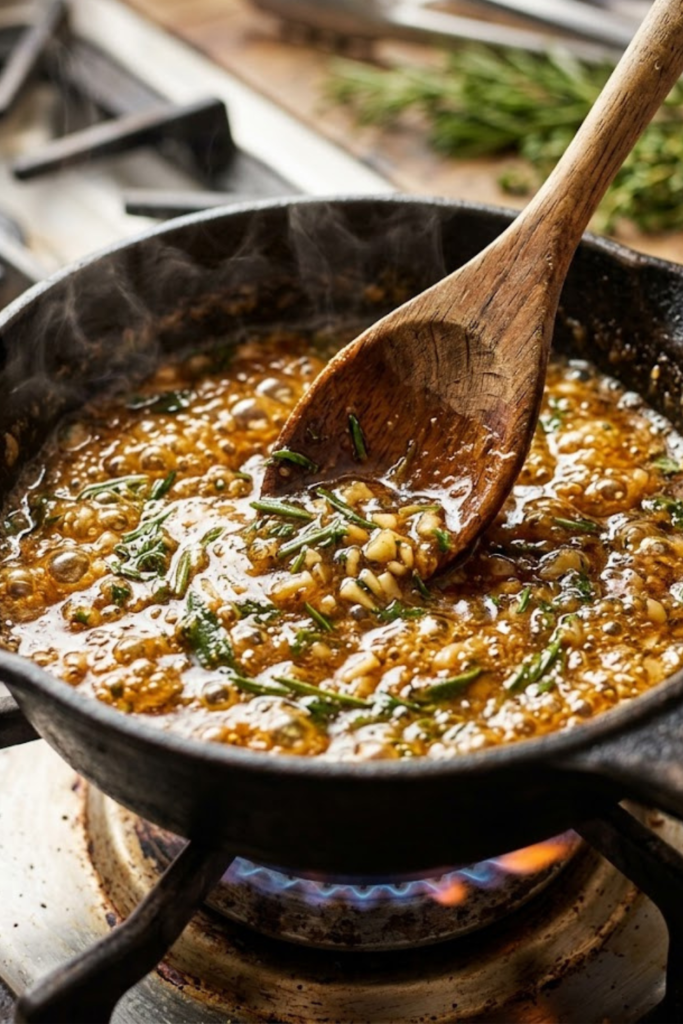
So, there you have it! Making chicken with herb pan juices isn’t as scary as it sounds. I’ve messed this up more times than I can count, like that one time I used way too much salt and we all had to drink a gallon of water after dinner. But that is okay! Even if it is not 100% perfect the first time, your family will probably just be happy you made them a warm meal.
I really love this recipe because it makes a regular Tuesday night feel a little bit more special. You don’t need a bunch of fancy tools or a degree in science to get it right. All you need is a hot pan, some fresh herbs, and a little bit of patience. I’ve learned that the best meals come from the mistakes we make in the kitchen, so don’t be afraid to get in there and try it.
If you give this a shot, I hope your house smells as good as mine does when that rosemary hits the butter. It’s those little moments that make cooking worth it.
If you enjoyed this guide and want to save it for later, please share it on Pinterest! It helps other home cooks find these tips too.