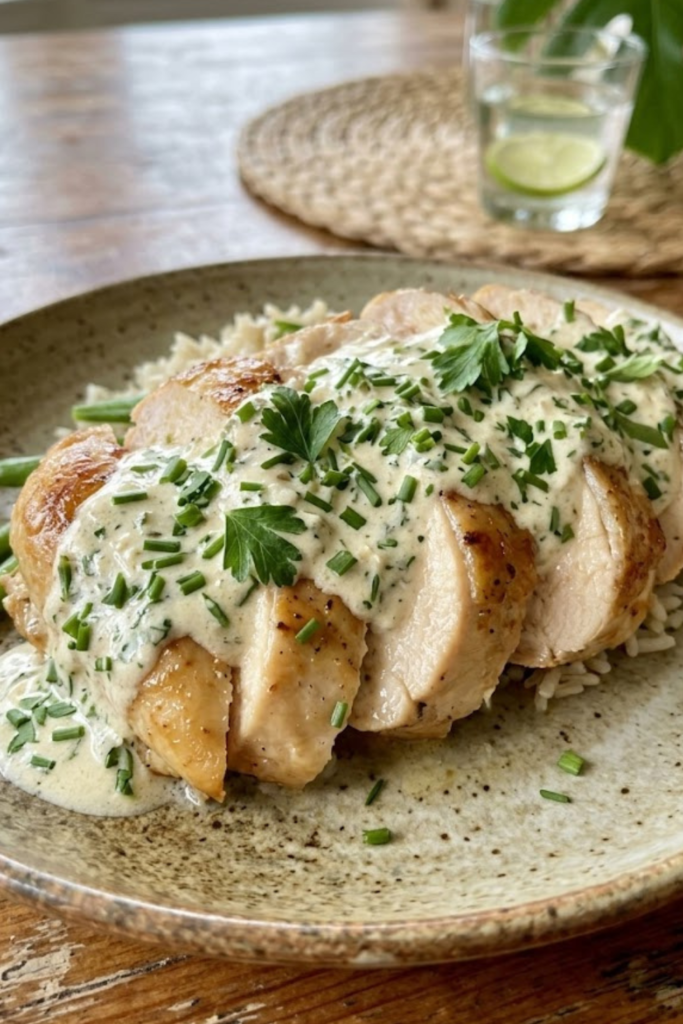
Did you know that over 60% of home cooks struggle with dry, flavorless poultry? It’s a total bummer when you spend time in the kitchen just to end up with something that tastes like cardboard! I’ve been there, trust me. Today, we are diving into the ultimate chicken with mild herb sauce, a dish that balances vibrant botanical notes with a rich, velvety finish. We’re using fresh aromatics like parsley and chives to create a “taste of the tropics” freshness right in your pan. Get ready for a meal that’s both comforting and sophisticated!
Selecting the Right Poultry Cuts for Tenderness
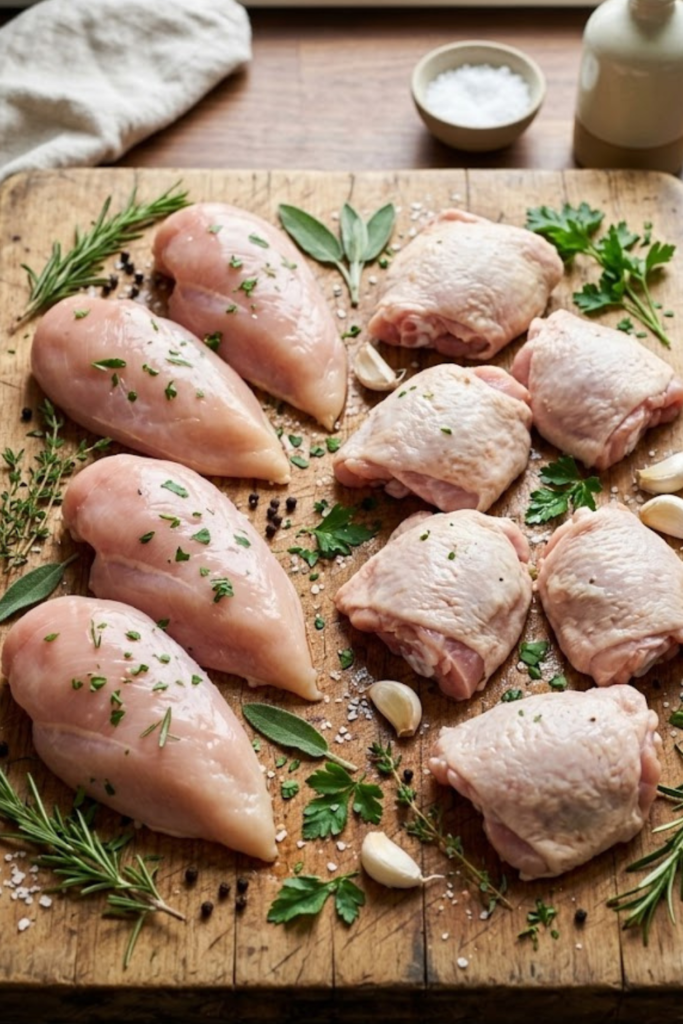
I’ve cooked a lot of chicken in my time, and I used to think a chicken breast was just a chicken breast. Boy, was I wrong! If you want that mild herb sauce to really shine, you have to pick the right meat. I usually go for boneless, skinless breasts because they soak up the sauce like a sponge. But, if you are worried about the meat getting dry, chicken thighs are your best friend. They have a bit more fat, which keeps them juicy even if you leave them in the pan a minute too long.
One thing I always tell my friends is to look for pieces that are roughly the same size. If one is huge and one is tiny, the tiny one will be tough as an old shoe by the time the big one is done. I like to use a heavy pan or even a rolling pin to gently whack the thicker parts until everything is even. It sounds a bit aggressive, but it makes a world of difference for even cooking.
Also, don’t just pull the chicken from the fridge and toss it straight into the heat. I made that mistake for years! The outside gets burnt and the inside stays raw. Give it about 15 or 20 minutes on the counter to take the chill off. It helps the meat relax so it stays tender when it hits the pan. Trust me, your patience will pay off when you take that first bite!
When you’re at the store, try to find air-cooled chicken if you can. Most chicken is chilled in water baths, which means the meat soaks up extra liquid. When that hits your hot pan, all that water leaks out and steams the chicken instead of searing it. Air-cooled birds have a much better flavor and actually let the mild herb sauce stick to the surface properly.
I also suggest looking for “natural” labels. You don’t want chicken that has been “enhanced” with a salty solution. That extra salt can make your final sauce taste way too salty before you even add your own seasonings. It’s much better to control the salt yourself so the herbs stay the star of the show.
If you decide to go with breasts, try slicing them into “cutlets.” I just lay my hand flat on top of the breast and carefully slice it sideways through the middle. This makes two thinner pieces that cook super fast. It’s a great trick for those busy nights when you need dinner on the table in twenty minutes.
Don’t forget about the grain of the meat! If you look closely, you can see the lines of the muscle fibers. When I’m prepping or even carving at the end, I try to work with those lines. It makes the meat feel much softer in your mouth.
Another little tip I’ve picked up is to pat the chicken completely dry with paper towels before you do anything else. If there is moisture on the skin or meat, it won’t get that golden-brown color we all love. That golden crust is where a lot of the flavor comes from, and it creates a great base for the sauce later on.
Lastly, think about the freshness. I try to buy my poultry the same day I’m going to cook it. If it sits in the fridge for three or four days, it starts to lose its texture. Fresh chicken just has a bounce to it that makes the whole meal feel a lot higher quality.
If you follow these steps, you’re setting yourself up for success. It’s not just about the recipe; it’s about starting with the right foundation. Once you get the meat right, the mild herb sauce is just the icing on the cake!
Preparing the Aromatic Herb Base
I’ve learned the hard way that not all herbs are created equal when you want a “mild” flavor. If you grab rosemary or thyme, they can sometimes take over the whole kitchen! For this chicken with mild herb sauce, I stick to what I call the “soft” herbs—parsley, chives, and maybe a little chervil if you can find it. They have a fresh, grassy taste that doesn’t punch you in the face.
Whenever I’m getting the herbs ready, I make sure they are bone-dry after washing them. If they are wet, they just turn into a green mush on the cutting board instead of nice, clean flakes. I use my sharpest knife and try to glide it through the leaves just once. If you keep chopping the same spot over and over, you’ll see the board turn green—that’s all the flavor staying on the wood instead of going into your sauce!
I also like to mix in a bit of minced garlic and a shallot. Shallots are great because they are like a mix between an onion and garlic but much sweeter. I sauté those first until they smell amazing, and then I toss the herbs in at the very last second. Heating the herbs just for a moment helps release those natural oils without making them turn brown or bitter. It’s a simple step, but it really makes the dish taste like you spent all day on it.
If you really want to level up the flavor, try using a mix of flat-leaf parsley and curly parsley. The flat-leaf kind has a stronger, peppery kick, while the curly type adds a nice texture and a bright pop of color that looks great on the plate. I usually go heavy on the flat-leaf for the sauce itself and save the curly stuff for a final sprinkle right before serving.
I’ve also found that the stems of these soft herbs have a ton of flavor, so don’t throw them all away! I finely mince the tender parts of the parsley stems and throw them in with the shallots. They hold up better to the heat than the leaves do and give the sauce a nice little crunch. It’s a great way to reduce waste in your kitchen and get every bit of value out of those herb bundles.
One little secret I use when I can’t find chervil is adding just a tiny pinch of dried tarragon. You have to be careful because tarragon is strong, but a tiny bit gives that classic French vibe that makes a mild sauce feel really sophisticated. Just make sure you crush the dried leaves between your fingers to wake them up before they hit the pan.
Lastly, pay attention to how much you are using. I usually aim for about a half-cup of chopped herbs for every four pieces of chicken. It might seem like a lot, but they shrink down a bit in the warm cream. You want every single bite of that chicken to be covered in those green flecks so you get that garden-fresh taste in every mouthful.
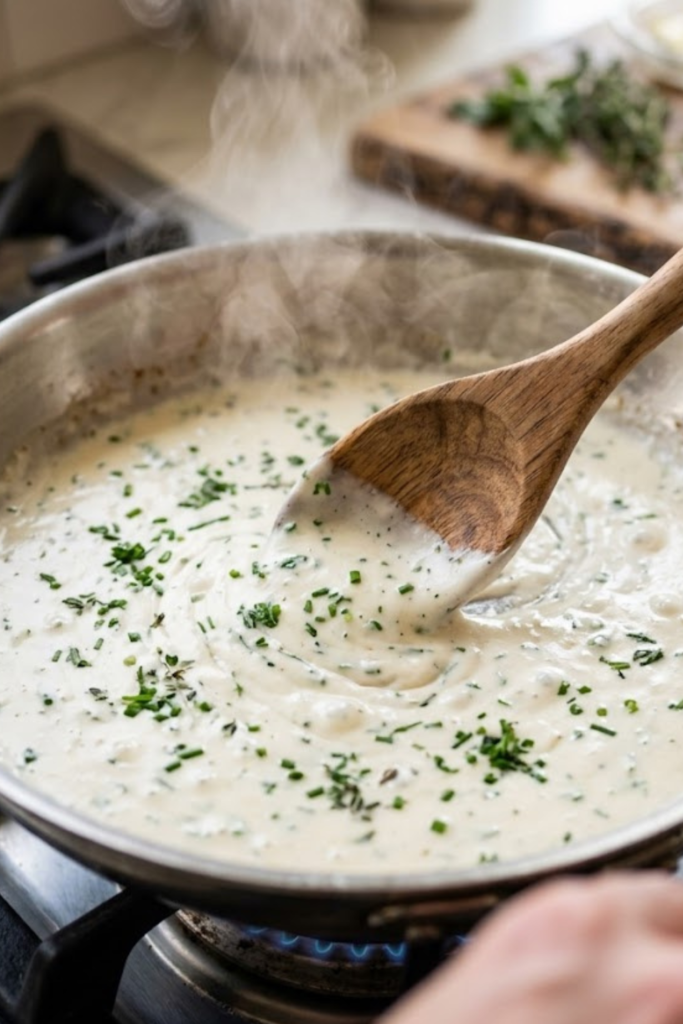
The Secret to a Silky Mild Herb Sauce
I’ll be real with you—I used to be terrible at making sauces. One time, I tried to make this exact chicken with mild herb sauce for a dinner date, and it ended up looking like cottage cheese. I was so embarrassed! I realized I was cranking the heat way too high and dumping cold cream into a scorching pan. It was a total rookie move.
The trick I learned through trial and error is to keep things at a low simmer. After you sear your chicken, take the pan off the burner for a minute to let it chill out. When you add your liquid—whether it’s broth or a splash of white wine—use a wooden spoon to scrape up those brown bits on the bottom. Those bits are flavor gold! They make the sauce taste deep and savory instead of just like plain cream.
When it’s time for the dairy, whisk it in slowly. If the sauce looks like it’s thinking about breaking, just keep whisking like your life depends on it! I like to add a cold piece of butter at the very end. It gives the sauce a glossy, restaurant-style look that makes it feel fancy. This simple step is how you get that perfect, velvety texture for your chicken with mild herb sauce.
Making chicken with mild herb sauce doesn’t have to be a chore; it’s a great way to bring a little bit of gourmet flair to your Tuesday night! By focusing on fresh ingredients and proper searing, you’ll have a plate that’s gone in seconds. I really hope you love this one as much as my family does! If you enjoyed this recipe, please save it and share it on Pinterest so others can find their new favorite dinner!