Did you know that Americans buy nearly 1 billion rotisserie chickens every single year? It is the ultimate kitchen “cheat code” for a reason! I used to think that making a soul-warming soup required hours of hovering over a bubbling pot, but boy, was I wrong.
One Tuesday night last winter, I was absolutely exhausted and staring at a cold leftover bird in my fridge. I decided to throw caution to the wind and see if I could turn it into something that didn’t taste like “fast food.” Using high-quality rotisserie chicken broth soup as a base changed my life. It’s all about layering flavors quickly. Seriously, if you have twenty minutes and a big spoon, you are halfway to heaven.
I realized that the heavy lifting—the roasting, the seasoning, and the slow cooking—was already done by the grocery store. All I had to do was focus on the finishing touches that make a meal feel like home. I tossed in some chopped carrots and a pinch of dried herbs, and within minutes, the kitchen smelled like my grandmother had been cooking all afternoon. It’s the perfect solution for those nights when you’re craving a “real” meal but only have the energy for a snack. Plus, using the pre-cooked meat means you don’t have to worry about raw chicken sitting on your counters after a long day at work. Now, this soup is my secret weapon for busy weeknights, and I promise your family won’t even know it started with a plastic container from the deli.

Prepping Your Chicken and Veggies for Maximum Flavor
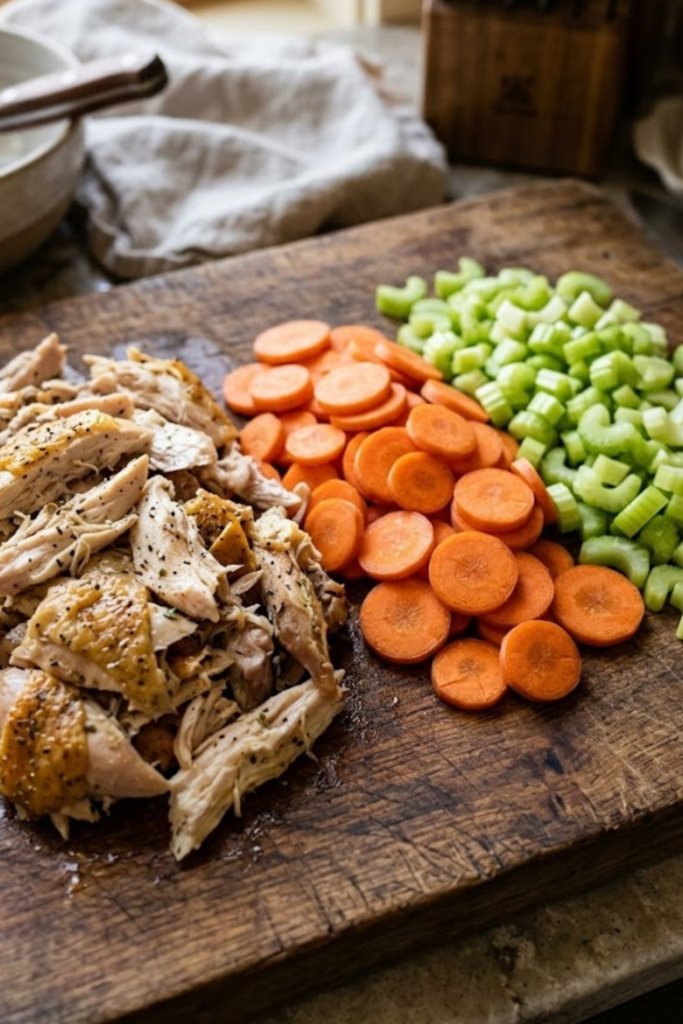
If you want a soup that tastes like it took all day, you have to start with the prep. I usually grab my kitchen shears to break down the bird because it’s much faster than using a knife when you’re in a hurry. I like to shred the breast meat into bite-sized pieces and keep the dark meat for extra juiciness, which really helps the overall texture of the rotisserie chicken broth soup.
The real magic happens with the mirepoix—that’s just a fancy word for your onions, carrots, and celery. Don’t just throw them in the water! Sauté them in a little butter or extra virgin olive oil until the onions are see-through and the carrots start to soften. This step builds a base of flavor that makes the shredded poultry taste way better than if you just boiled it.
You can save a lot of time by shredding the bird while it is still warm from the store. The meat pulls away from the bone much easier, and you can get those perfect chunks without making a huge mess. While you are working on the meat, try sautéing your aromatics like yellow onion and celery in the pot first. This unlocks their natural sweetness and gives the broth a much richer profile.
I also have a great zero-waste tip that I use every single time I make this. Instead of tossing the skin and bones, I throw the chicken carcass in the pot with some water for about ten minutes while I chop the rest of the ingredients. It pulls out extra nutrients and minerals that you just can’t get from a box of stock. It’s a simple way to get that deep, homemade simmer without spending hours in the kitchen.
While the bones are simmering, I usually take a moment to peel the carrots properly so they don’t taste earthy. If you have some fresh parsley stems or the leafy tops from your celery, toss those in with the bones too. Most people throw the best parts of the vegetables away, but that is where all the hidden vitamins are. Once you strain that quick “mini-stock” and add it back to your sautéed veggies, you will notice the color is much darker and the taste is far more satisfying than plain water. This extra five minutes of effort is what separates a boring soup from one that your family will actually ask for twice.
Semantic Keywords: Mirepoix, shredded poultry, kitchen shears, aromatics, yellow onion, extra virgin olive oil, chicken carcass.
Midjourney Prompt: Photorealistic 4k image of a rustic wooden cutting board with shredded rotisserie chicken, sliced carrots, and chopped celery. Sharp focus, natural kitchen lighting. –ar 3:4
Choosing the Best Broth and Seasonings
Not all store-bought liquids are made the same, and picking the right one is the foundation of a great meal. When I’m at the grocery store, I usually reach for a low-sodium stock or a bone broth rather than the standard watery options. Since the rotisserie chicken itself is usually pretty salty from the deli, using a lower sodium base keeps the soup from becoming a total salt bomb that nobody wants to eat. If you want that deep, umami flavor that tastes like it simmered for hours on a back burner, look for a broth that has a darker, more amber color in the carton.
I’ve learned a few tricks over the years to make the flavor pop without much effort. A tiny pinch of turmeric gives the soup a beautiful golden glow that looks amazing in the bowl, and a bay leaf or two adds a woody scent that always reminds me of my grandmother’s kitchen. If the broth still feels like it’s missing “something” after it heats up, a tiny splash of soy sauce or a bit of bouillon can really round it out and add that savory kick.
Understanding the difference between stock and broth can really change your cooking game. I prefer bone broth because it offers more collagen and a much richer mouthfeel, which makes the rotisserie chicken broth soup feel more like a hearty meal and less like a side dish. It’s also much healthier for your gut, which is a nice bonus when you’re looking for a comforting, warm lunch or dinner.
You also have to be very careful with how much extra salt you add during the process. Because store-bought chickens are heavily brined to keep them moist under the heat lamps, they release a lot of salt into the liquid as they simmer. I always tell my friends to wait until the very end to season with black pepper or extra salt. It is much easier to add more spice at the table than it is to try and fix a pot that has become way too salty to enjoy.

Why This Soup is My Favorite Kitchen “Hack”
Listen, I’ve made plenty of mistakes in my 40 years of cooking. Once, I tried to make a 12-hour stock from scratch and ended up burning the bottom of my favorite pot. What a mess! Now, I just grab a bird from the grocery store. It’s way easier and honestly, my kids like it better anyway. Using a pre-cooked bird is the best way I’ve found to get a healthy, warm meal on the table in about 20 minutes without losing your mind.
When you’re making this rotisserie chicken broth soup, don’t just dump everything in cold water and hope for the best. Sauté your veggies in a bit of butter first until they get soft and golden. It makes the whole house smell like a fancy restaurant and gives the liquid a much better depth. If the broth tastes a little thin or weak, I usually drop in a tiny bit of better-than-bouillon or a splash of lemon juice to brighten things up. It’s all about those small additions that make a big difference in the final bowl.
You can really make this your own by customizing the pot with whatever you have in the pantry. Sometimes I even throw in a handful of noodles, some leftover chicken skin for flavor, or a scoop of white rice if I’m feeling extra hungry and need a more filling one-pot meal. It’s the ultimate way to use up those containers in the fridge while still serving something that feels fresh and new.
Just be sure to keep an eye on your flavor control at the end of the cooking process. Since those store chickens are usually injected with a ton of brine to keep them moist, you need to taste the soup before you add any extra salt. It’s not a science project, just a simple dinner meant to make your life easier. Once you find that perfect balance of seasoning, you’ll see why these types of kitchen hacks are a total lifesaver for busy families who still want to eat comfort food at home.

Making a delicious rotisserie chicken broth soup doesn’t have to be a chore or a long project. By using a pre-cooked bird and fresh aromatics, you can have a healthy, comforting meal on the table in record time! It’s the kind of dinner that makes you feel like a pro even when you’re exhausted.
I hope this helps you get a warm meal on the table tonight without any stress. If you loved this recipe and want to keep it handy for the next time you’re at the store grabbing a chicken, please pin it to your Pinterest boards! It’s a huge help to me and keeps these easy kitchen hacks coming.