rotisserie chicken pad thai is a fast, flavorful Thai noodle dish that blends tender cooked chicken with sweet, tangy, and savory sauce for a weeknight dinner masterpiece. This rotisserie chicken pad thai recipe minimizes prep and maximizes taste, making it ideal for busy cooks who want restaurant-quality results at home. The classic blend of tamarind, fish sauce, and palm sugar creates a balanced sauce that coats rice noodles perfectly. With rotisserie chicken already cooked and seasoned, this rotisserie chicken pad thai comes together quickly while keeping every bite juicy and satisfying.
| Prep Time | Cook Time | Total Time | Servings | Difficulty | Cuisine |
|---|---|---|---|---|---|
| 20 minutes | 15 minutes | 35 minutes | 4 | Easy | Thai |
Why This rotisserie chicken pad thai Works
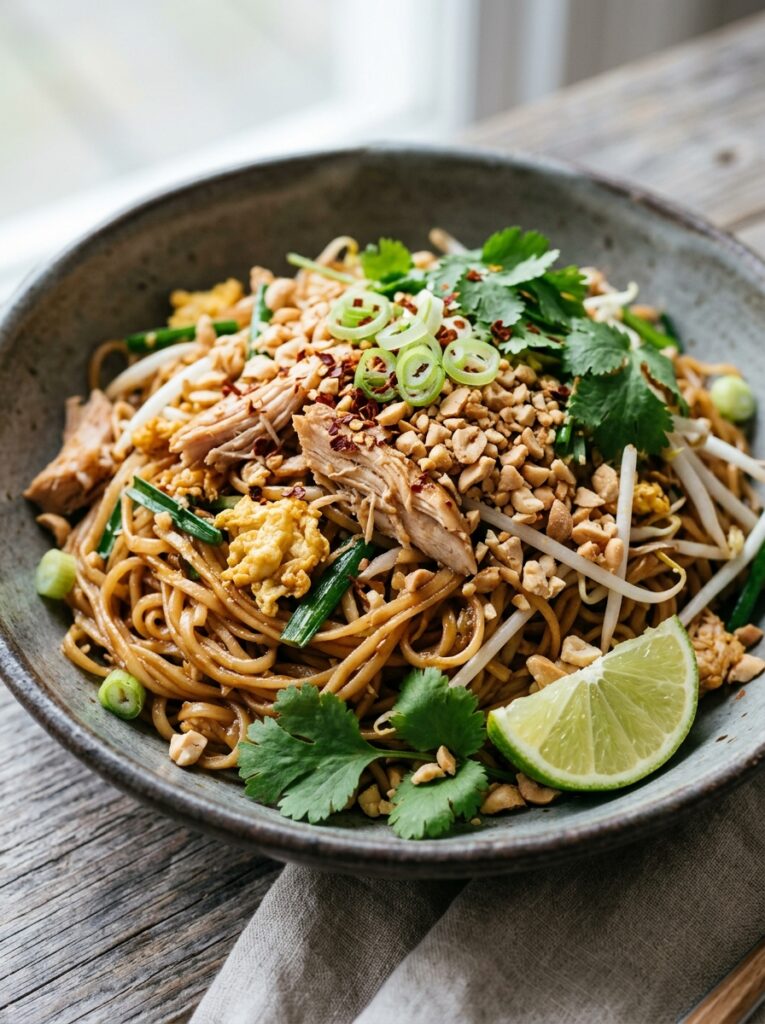
This rotisserie chicken pad thai works because it leverages pre-cooked chicken that brings savory depth, gentle smokiness, and consistent moisture to the noodles. I rely on this approach for weeknights when timing matters, and the texture remains reliably tender without drying out during stir-frying. The sauce comes together quickly, and the balance of tamarind, fish sauce, and palm sugar delivers bright acidity, salty umami, and subtle sweetness that keeps every forkful lively. The rotisserie chicken pad thai also benefits from quick-tossing techniques, which keep noodles springy and the egg silky without becoming rubbery.
Home cooks appreciate how the recipe simplifies mise en place because the chicken is ready to use, allowing you to focus on timing the noodles and sauce. I appreciate that the flavor feels authentic while the steps stay friendly for beginners, creating a dish that is both approachable and dependable. Textures stay intact when you briefly warm the chicken and combine it just before saucing, so the rotisserie chicken pad thai never tastes stewed or soggy. With tested ratios and clear cues, this rotisserie chicken pad thai becomes a repeatable favorite that tastes like takeout without the cost or wait.
Many cooks also enjoy how adaptable this rotisserie chicken pad thai is, and you can tailor the heat, sweetness, and toppings with minimal effort. I intentionally designed the method so the noodles soak up the sauce evenly, creating cohesive bites rather than splashed-on surface flavor. The results stay consistent with a hot skillet, quick movements, and smart timing, which keeps every component distinct yet unified. With that said, the soul of the dish remains the same: comfort, simplicity, and craveable flavor in every bowl of rotisserie chicken pad thai.
rotisserie chicken pad thai Ingredients
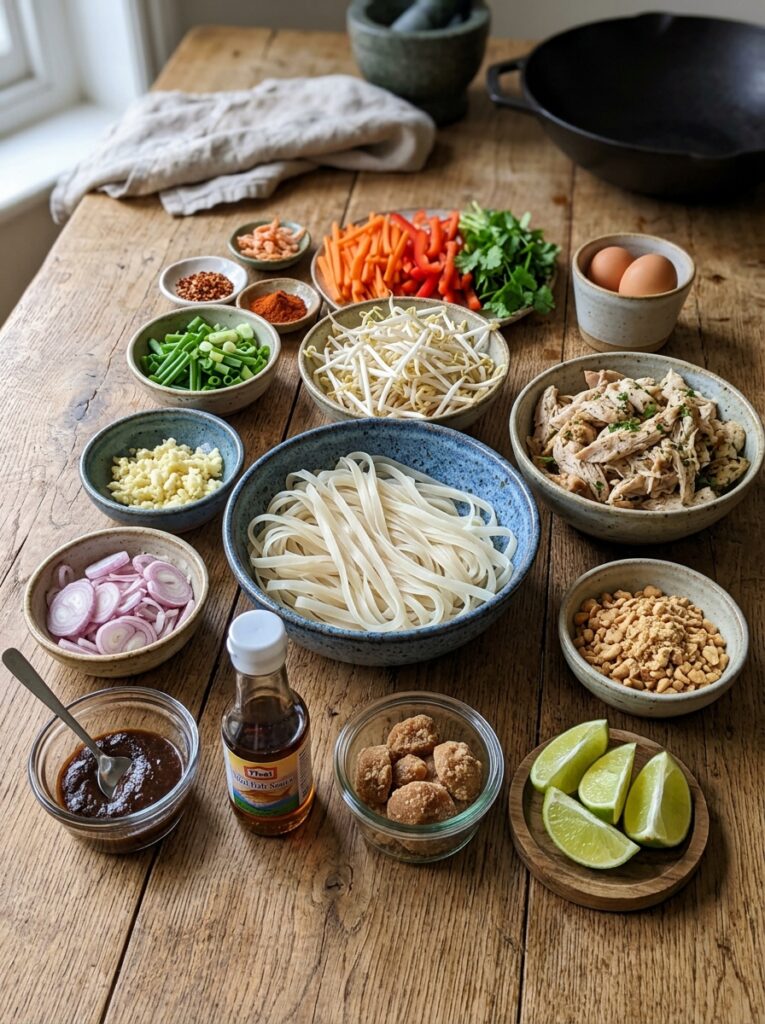
This section lists everything you need to make rotisserie chicken pad thai with substitutions for flexibility and quality choices for superior taste.
| Ingredient | Quantity | Notes with alternatives |
|---|---|---|
| Rice noodles (dried, flat) | 8 ounces | Use Pad Thai rice noodles; soak in warm water to soften. |
| Rotisserie chicken, shredded | 2 cups | Use skinless breast or thigh; avoid seasoning blends with alcohol. |
| Large eggs | 2 | Optional but classic; scramble gently for texture. |
| Bean sprouts | 1 cup | Use fresh sprouts; sub shredded cabbage for crunch. |
| Green onions, sliced | 3 | Use white and green parts; add more for garnish. |
| Garlic, minced | 3 cloves | Sub garlic powder in a pinch. |
| Shallot, thinly sliced | 1 small | Sub yellow onion for a stronger bite. |
| Tamarind paste | 3 tablespoons | Use pure tamarind concentrate; avoid overly sweet blends. |
| Fish sauce | 3 tablespoons | Use a high-quality brand; sub vegan fish sauce if needed. |
| Palm sugar, grated | 2 tablespoons | Sub brown sugar or coconut sugar for a similar depth. |
| Lime | 1 | Use for juice and wedges; adds essential brightness. |
| Roasted peanuts, chopped | 1/3 cup | Sub cashews or omit for nut-free. |
| Neutral oil | 2 tablespoons | Use canola or vegetable oil; avoid strong-flavored oils. |
| Water or low-sodium chicken stock | 1/4 cup | Helps loosen sauce for even coating. |
| Crushed red pepper flakes | 1/2 teaspoon | Adjust heat to taste; optional for mild versions. |
How to Make rotisserie chicken pad thai
Follow these steps to build balanced flavor and perfect texture in your rotisserie chicken pad thai.
- Soak the rice noodles in warm water until pliable but still slightly firm, then drain thoroughly for a springy stir-fry texture.
- Whisk the tamarind paste, fish sauce, palm sugar, lime juice, and stock into a smooth sauce for consistent coating.
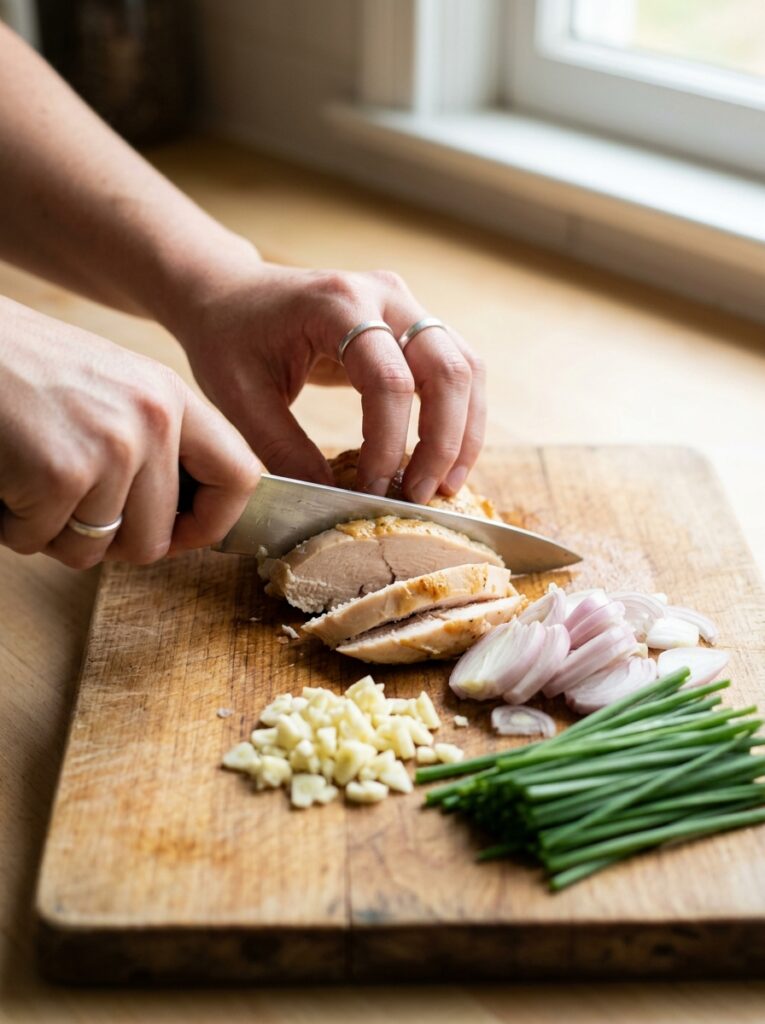
- Heat a wide skillet over medium-high heat and add oil, then sauté garlic and shallots until fragrant and lightly golden.
- Push aromatics aside, add beaten eggs, and scramble gently until just set, keeping them tender for the final toss.
- Add drained noodles and pour in the sauce, tossing constantly so the noodles absorb flavor evenly and become glossy.
- Stir in shredded rotisserie chicken and bean sprouts, cooking briefly to warm through while preserving crunch and moisture.
- Finish with green onions, crushed pepper, and chopped peanuts, then serve with extra lime and extra bean sprouts.
Chef Tips for Perfect rotisserie chicken pad thai
These chef-tested tips ensure your rotisserie chicken pad thai turns out restaurant-quality every time.
- Use a wide, hot skillet: A large surface area encourages fast evaporation and prevents noodles from steaming instead of searing.
- Prep every component before heating: Have sauce, noodles, chicken, and garnishes within reach to keep the stir-fry moving quickly.
- Don’t over-soak the noodles: Aim for pliable but slightly firm so they finish cooking in the sauce without turning mushy.
- Balance sweet, sour, and salty: Taste and adjust with a little more tamarind or sugar to dial in brightness and depth.
- Keep chicken warm but not cooked further: Fold in rotisserie chicken at the end to preserve moisture and prevent overcooking.
- Control heat level: Start mild and add crushed pepper at the table, especially if serving kids or spice-sensitive guests.
Common rotisserie chicken pad thai Mistakes to Avoid
Avoid these mistakes to keep your rotisserie chicken pad thai flavorful, textured, and balanced.
- Over-soaking noodles: They turn mushy and clump in the pan. Fix by soaking briefly, then draining and rinsing under cool water.
- Under-heating the skillet: Low heat causes steaming instead of searing. Fix by preheating until the oil shimmers before adding aromatics.
- Missing acid or sweetness: Bland sauce happens when balance is off. Fix by adding more tamarind for sourness or sugar for roundness.
- Overcooking eggs: Scrambled eggs can become rubbery. Fix by cooking gently until just set and removing from heat early.
- Adding chicken too early: Overcooked, dry chicken results. Fix by folding shredded rotisserie chicken in at the end to warm gently.
- Underseasoning at the end: Flavor can fall flat. Fix with a splash of fish sauce or lime juice right before serving.
Best rotisserie chicken pad thai Variations and Substitutions
Use these substitutions to tailor rotisserie chicken pad thai for dietary needs, flavor changes, and ingredient availability.
| Ingredient | Substitution | Impact on Flavor |
|---|---|---|
| Rice noodles | Thin rice sticks or gluten-free spaghetti | Similar texture with slightly different chew. |
| Fish sauce | Vegan fish sauce or extra soy sauce | Salty umami; a touch different depth. |
| Palm sugar | Brown sugar or coconut sugar | Comparable sweetness with subtle notes. |
| Tamarind paste | Lime juice and a pinch of brown sugar | Bright sourness with mellow sweetness. |
| Rotisserie chicken | Shredded baked chicken or tofu | Similar protein, mild texture changes. |
| Peanuts | Cashews or toasted sesame seeds | Nutty crunch with a different profile. |
| Bean sprouts | Shredded cabbage or bok choy | Crunchy body with mild differences. |
| Neutral oil | Avocado oil or grapeseed oil | Clean cooking fat with high smoke point. |
For a lower-sodium version, reduce fish sauce and bolster flavor with extra garlic, shallots, and lime. For a gluten-aware option, verify the tamarind and fish sauce labels, since most brands are naturally gluten-free. To reduce spice, omit pepper flakes and rely on garlic and lime for lively flavor. You can also visit USDA food safety guidance for safe storage and reheating tips for cooked chicken. For sauce inspiration, see this Thai peanut sauce variation for an alternate noodle experience.
Serving Suggestions for rotisserie chicken pad thai
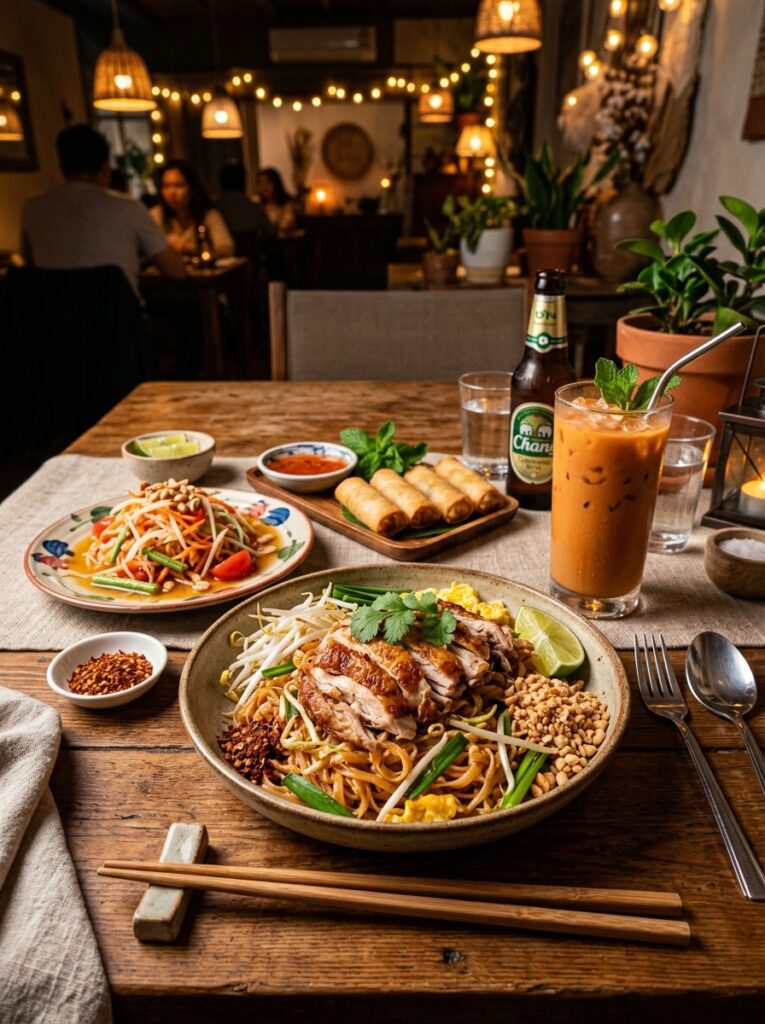
Serve rotisserie chicken pad thai immediately with extra lime wedges, crushed peanuts, and fresh bean sprouts for texture.
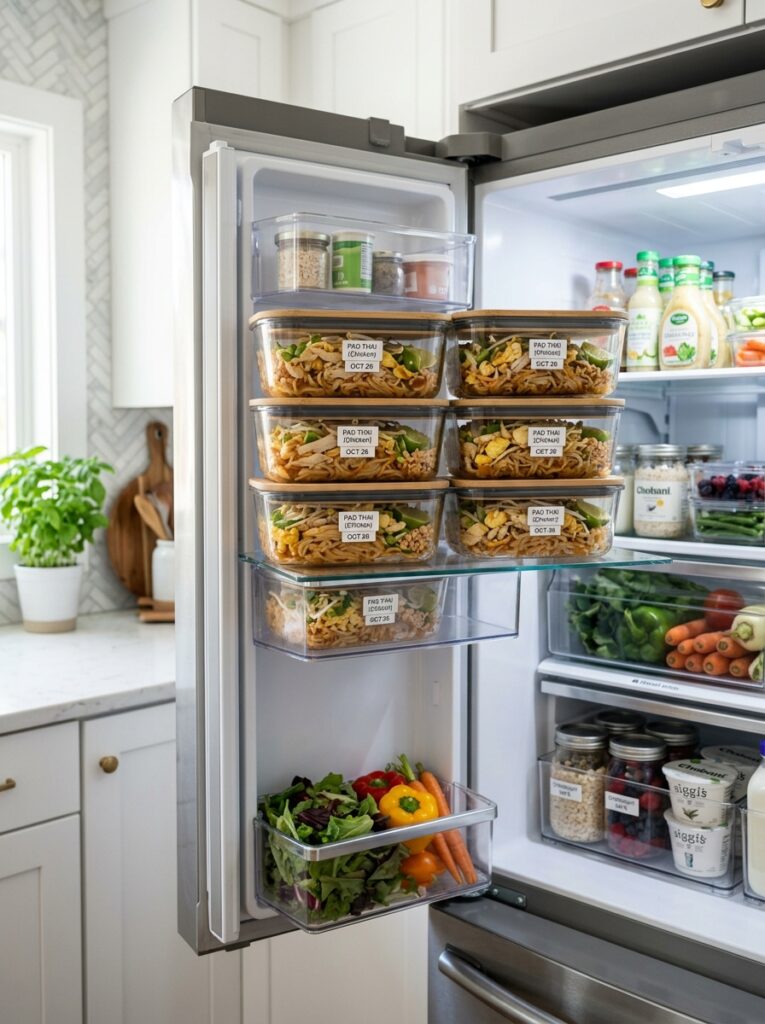
Pair the dish with crisp cucumber salad, grilled vegetables, or a light miso soup for a balanced meal. For weeknight dinners, plate family-style in a large bowl and let everyone add toppings, which keeps noodles lively and crunchy. For gatherings, portion into small bowls with chopsticks and offer a spicy chili vinegar on the side. This rotisserie chicken pad thai also works beautifully for meal prep, where quick reheating keeps it reliable for lunch the next day.
Storage and Reheating for rotisserie chicken pad thai
Store and reheat rotisserie chicken pad thai properly to maintain safe temperatures and preserve texture.
| Method | Duration | Instructions |
|---|---|---|
| Refrigerator | 3 to 4 days | Cool quickly, store airtight, and keep noodles separate if possible. |
| Freezer | 1 to 2 months | Freeze without sprouts, and add fresh greens after reheating. |
| Reheating stovetop | 3 to 5 minutes | Toss in a hot skillet with a splash of water or stock. |
| Reheating microwave | 1 to 2 minutes | Use medium power and stir halfway to avoid hot spots. |
| Make-ahead | 1 day | Prep sauce and noodles; combine and reheat just before serving. |
| Food safety | Per USDA | Keep chicken at 165°F; avoid leaving at room temperature. |
Nutritional Information for rotisserie chicken pad thai
Use these approximate values to plan portions for rotisserie chicken pad thai.
| Nutrient | Amount per Serving |
|---|---|
| Calories | 520 |
| Protein | 32 g |
| Fat | 17 g |
| Carbohydrates | 65 g |
| Fiber | 3 g |
| Sugar | 12 g |
| Sodium | 980 mg |
Approximate values.
Frequently Asked Questions About rotisserie chicken pad thai
Can I make rotisserie chicken pad thai without tamarind paste?
Yes, you can make a bright, balanced sauce using lime juice and a small amount of brown sugar. The result is slightly less traditional but still tangy and delicious. This swap keeps rotisserie chicken pad thai quick and accessible.
How do I know when the noodles are perfectly cooked?
Noodles should be pliable, slightly firm, and springy after soaking and saucing. If they feel mushy, you over-soaked; if chewy, they need more sauce contact. Aim for a glossy, cohesive texture that clings to the chicken.
Why is my rotisserie chicken pad thai bland?
Blandness usually means the sauce lacks balance or heat. Add a splash of fish sauce for salt, a pinch more sugar for roundness, or extra lime for brightness. Finish with peanuts and chili flakes for layered flavor.
Can I prepare rotisserie chicken pad thai ahead of time?
Yes, prep sauce and noodles ahead, then combine and reheat briefly in a hot skillet. Add bean sprouts and green onions just before serving to preserve crunch. This method keeps rotisserie chicken pad thai tasting fresh.
What side dishes go best with rotisserie chicken pad thai?
Try a crisp cucumber salad, grilled vegetables, or a light soup to complement the rich noodles. A cool, refreshing beverage balances heat and acidity. For gatherings, offer extra lime and chili vinegar on the side.
How should I store leftovers safely?
Cool quickly and store airtight in the refrigerator for up to four days. Keep bean sprouts separate if possible, and reheat thoroughly to 165°F. For best texture, reheat in a skillet rather than a crowded microwave.
What is the best way to reheat without drying the chicken?
Reheat gently in a hot skillet with a splash of water or stock, tossing until warmed through. Avoid high heat for prolonged times, which can dry the rotisserie chicken. A short, lively toss keeps noodles springy and juicy.
Can I freeze rotisserie chicken pad thai?
Freeze without bean sprouts, then add fresh sprouts and green onions after reheating. Thaw overnight in the fridge and reheat in a skillet for best texture. This approach maintains integrity and minimizes sogginess.
What flavor variations can I try for rotisserie chicken pad thai?
Try adding a spoonful of Thai curry paste, extra garlic, or more lime for a brighter profile. Swap peanuts for cashews or add chili vinegar for tangy heat. You can also mix in extra vegetables for a heartier bowl.
Are there beginner tips for nailing rotisserie chicken pad thai?
Prep every ingredient before you start cooking and keep heat medium-high for a quick stir-fry. Taste and adjust the sauce as you go, then fold in chicken at the end to keep it juicy. Practice once, and the process becomes easy and repeatable.
Conclusion
Rotisserie chicken pad thai brings together weeknight convenience and authentic Thai flavors in one satisfying bowl. With a reliable sauce balance, smart timing, and quality toppings, this rotisserie chicken pad thai delivers consistent results that taste like takeout. Try it with family dinner or as a meal prep staple, then customize with your favorite garnishes to make it your own. You will love the glossy noodles, tender chicken, and the bright finish of lime and peanuts in every bite.
Print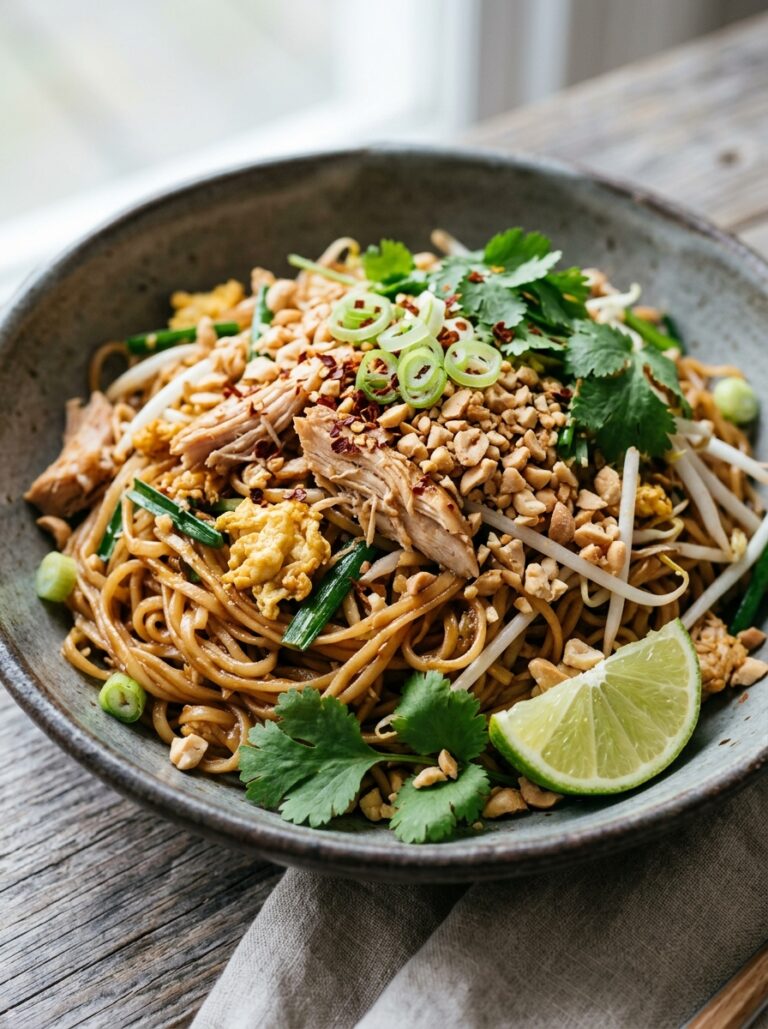
Rotisserie Chicken Pad Thai: Easy Recipe
A quick Thai-inspired dish using tender rotisserie chicken, sweet-tangy tamarind sauce, and chewy rice noodles for a restaurant-quality weeknight meal. This recipe maximizes flavor with minimal effort and a smoky, savory base.
- Total Time: 35
- Yield: 4 servings 1x
Ingredients
8 oz (225g) dried rice noodles
2 cups shredded rotisserie chicken
2 tbsp tamarind paste
3 tbsp fish sauce
1 tbsp palm sugar or brown sugar
2 cups bean sprouts
4 green onions, sliced
1/4 cup roasted peanuts, chopped
1 lime, cut into wedges
1 to 2 tsp chili flakes (optional)
2 tbsp vegetable oil
2 eggs, lightly beaten
1 cup crushed ice
Instructions
Cook rice noodles according to package instructions, drain, and set aside.
Warm shredded rotisserie chicken in a skillet over medium heat until heated through.
In a small bowl, mix tamarind paste, fish sauce, and palm sugar into a sauce.
Heat oil in a large wok or pan, stir-fry bean sprouts and green onions until tender.
Push veggies to the pan’s edge, scramble eggs in the center, then combine with chicken.
Add cooked noodles and sauce, tossing to coat evenly. Add crushed ice to cool slightly.
Serve with chopped peanuts, lime wedges, and additional chili flakes.
Notes
Use halal-certified rotisserie chicken if preferred
Adjust sauce intensity by adding more or less tamarind paste
Add tofu for a protein boost
Store leftovers in an airtight container for up to 3 days
- Prep Time: 20
- Cook Time: 15
- Category: Quick Chicken
- Method: Stir-Frying
- Cuisine: Thai
Nutrition
- Serving Size: 1 serving
- Calories: 580
- Sugar: 5g
- Sodium: 4200mg
- Fat: 20g
- Saturated Fat: 8g
- Carbohydrates: 100g
- Fiber: 3g
- Protein: 30g
- Cholesterol: 180mg